

RACH Profiles · Longevity and Biotechnology
Carol Greider: A Life at the Ends of Chromosomes
From a childhood ill-described by conventional tests to the discovery of telomerase, inherited-disease research and a new way to examine chromosome ends: a scientific life built through experiments, setbacks and shared work.
- Current role
- Distinguished Professor of Molecular, Cell and Developmental Biology, UC Santa Cruz.1
- Focus
- Telomerase, chromosome-end maintenance and disease mechanisms.
- Evidence boundary
- Cell and animal findings, clinical decisions and proposed applications are distinguished. This is not medical advice.
Christmas was the beginning, not the proof
On Christmas Day in 1984, a graduate student at Berkeley obtained the first experimental signal of an enzyme that could rebuild chromosome ends. Carol Greider was working with Elizabeth Blackburn. The result would become central to the discovery of telomerase, but it was not ready to become a conclusion simply because it looked exciting. In Mitchell Leslie’s later account, the researchers spent nearly another year testing whether they had found the activity they thought they had found. Their paper appeared in 1985.4, 6
The familiar discovery story ends at the first convincing-looking result. Greider’s story becomes more interesting when it stays in the laboratory afterward. What would distinguish a new enzyme from an artifact? What did the experiment actually establish? Which alternative explanations still needed an answer?
Those questions connect the young biochemist with the scientist working at UC Santa Cruz four decades later. The public temptation is to turn chromosome biology into a promise about aging. Her documented achievement is more precise: helping make a previously mysterious biological mechanism experimentally accessible, then following its consequences into genetics and disease.
A childhood that did not fit the standard test
Greider was born in San Diego in 1961 and grew up in Davis, California. Her parents, Kenneth Greider and Jean Foley, were scientists. Her mother died in 1967. In her Nobel autobiography, Greider describes difficulty learning to read and placement in remedial classes; she later understood those experiences through dyslexia. Scientific accomplishment did not erase that earlier encounter with a school system in which her abilities were not readily recognized.2
She also recalls a year in Heidelberg in 1971, learning German through immersion and gaining independence. These are her recollections, not scenes reconstructed by RACH. They help explain why a biography needs more than a sequence of degrees: a person can acquire confidence and practical resourcefulness in settings that do not resemble an examination.2
There is no need to make childhood difficulty into a prerequisite for discovery. Nor does one successful career show that educational barriers are harmless. In this life, the mismatch between test performance and research ability would remain consequential when graduate-school applications came due.
Finding a place at the bench
At UC Santa Barbara, Greider developed an interest in experimental work and completed her bachelor’s degree in 1983. A 2005 PNAS biography describes sustained undergraduate laboratory experience and research during a period in Germany. The important change was not simply choosing biology as a subject. It was finding work in which a question could be broken into experiments and investigated with biochemical tools.3
Graduate admissions presented a different kind of test. The same biography describes weak Graduate Record Examination results alongside substantial research experience; Berkeley and Caltech offered interviews. A numerical filter was therefore an imperfect description of the candidate sitting behind it. At Berkeley she encountered Blackburn and the chromosome-end problem that would shape her doctorate.3
In retrospect, admission can look like a ceremonial doorway to a famous discovery. At the time it was an actual selection process with the power to exclude. Greider’s subsequent career is not evidence that every unconventional applicant will become a Nobel laureate. It is evidence that research promise cannot safely be reduced to one measure of performance.
A problem older than the partnership
Chromosome ends had a history before Greider entered Blackburn’s laboratory. Hermann Muller and Barbara McClintock had helped establish that natural ends behave differently from broken chromosomes. Later, the mechanics of DNA replication exposed a further puzzle: copying linear DNA did not straightforwardly explain how its ends could be maintained through repeated divisions.5
Blackburn’s work on repeated sequences at the ends of Tetrahymena chromosomes, and experiments with Jack Szostak showing protection of chromosomes in yeast, made the problem more concrete. The question was no longer only why an end was special. Researchers could ask what sequence protected it and how that sequence was renewed.5
This inheritance matters to the credit. Greider did not invent the question, Blackburn did not work without predecessors, and the later Nobel Prize did not divide an entire field into three exclusive possessions. The distinctive contribution of the Berkeley partnership was to pursue an experimentally testable activity that could add telomeric DNA. The earlier discoveries supplied both the reason to look and important clues about what to look for.
Making an invisible activity visible
The 1985 Cell paper by Greider and Blackburn reported an activity in Tetrahymena extracts that added repeated DNA sequences to synthetic primers. This single-celled organism was a productive experimental choice: its chromosome biology offered abundant ends to investigate. The experiment did not require watching an enzyme with the naked eye. It required detecting the DNA products of its work.6
The report tested the reaction’s requirements and its sensitivity to treatments such as heat and protease. Those controls helped distinguish the activity from a casual interpretation of an unfamiliar pattern. The authors were identifying a biochemical behavior, not announcing that they had solved aging or developed a treatment.6
For a beginning researcher, this was also training in what a discovery demands. A promising result has to survive deliberate attempts to make it disappear for the right reasons. The importance of the work rests partly in that transition from observation to discriminating experiment: other scientists could examine the reaction, challenge the explanation and build on a procedure rather than merely accepting a story.
The enzyme carried a second kind of information
A subsequent Greider–Blackburn paper, published in 1987, showed that the activity depended on both protein and RNA. That result changed the kind of molecular object scientists were trying to understand. Telomerase was not simply another protein acting on a DNA substrate; an RNA component was essential to the functioning complex.7
In ordinary language, the problem began to look less like locating a single tool and more like understanding a small working assembly. Which component supplied what? How did the assembly recognize a chromosome end? Where did the information for the added DNA sequence reside?
These questions should not be flattened into one retrospective breakthrough. The initial activity, its components and its mechanism were separate experimental achievements. Their sequence makes the career legible: Greider’s first result opened a line of work rather than closing a subject. The later papers were not decorative confirmations added after the important moment. They were how a promising enzyme activity became a mechanism with features that could be tested independently.
A template, not a metaphor
In 1989, Greider and Blackburn described the telomerase RNA and identified a sequence complementary to the telomeric repeat. The finding supported the proposal that this RNA supplied a template for making the DNA added to chromosome ends. RNA was not merely present in the complex; its sequence offered an explanation for the sequence of the product.8
The distinction between a proposed mechanism and every subsequent demonstration of it is important. Experiments changing the template and examining altered telomeres belonged to a wider research program, including work by Gou-Liang Yu with Blackburn. A biography centered on Greider should not absorb those experiments into her name.5
The conceptual reward was substantial. Maintaining a chromosome end could now be understood through a molecular process rather than a vague protective property. Yet knowing that process did not establish how often it should operate in a human tissue, what happens when regulation fails, or whether manipulating it would help a particular patient. Those became further questions, not benefits automatically delivered by the discovery.
Beginning again on Long Island
After completing her doctorate, Greider began an independent fellowship at Cold Spring Harbor Laboratory in January 1988. Her autobiographical chronology is useful here: an independent appointment should not be rewritten as another period of training under Blackburn merely because the collaboration was formative.2
Cold Spring Harbor’s account of her career describes her subsequent faculty appointment and preserves a less polished view of laboratory life through an unsuccessful purification attempt recorded in her notebook. The record includes starting over, not just successful results. The institution also credits her role in bringing telomere researchers together for a meeting and a jointly edited volume.18
Independence changed the scale of responsibility. The question was no longer only whether she could perform an experiment; it was whether a laboratory and a research community could sustain a program of experiments. Collaboration, meetings and shared technical understanding belong in that story because a field grows through many people being able to ask better questions, not through a discovery remaining the private achievement of its first authors.
Cells brought time into the experiment
In 1990, Calvin Harley, Bruce Futcher and Greider reported that telomeres shortened as human fibroblasts were serially cultured. The work connected chromosome-end measurements with the limited replicative life of those cells under laboratory conditions. It was an important bridge from an unusual model organism to a familiar question about human cells.9
It was not a trial in people. Cultured fibroblasts are not a complete human being, and a relationship between cellular divisions and telomere length does not establish that lengthening telomeres will extend a person’s healthy life. Reading the paper accurately requires keeping the experimental system in the sentence.
This is one reason Greider’s career is relevant to longevity without being an endorsement of the longevity marketplace. The research helped establish mechanisms and measurements that later arguments would use. It did not license every argument made with them. The difference between understanding a process associated with cellular aging and demonstrating a safe intervention in human aging is not semantic caution; it is the difference between two kinds of evidence.
An organism complicates the picture
A 1997 Cell study moved the question into mice lacking the telomerase RNA component. María Blasco, Han-Woong Lee, M. P. Hande, Enrique Samper, Peter Lansdorp, Ronald DePinho and Greider were among the authors. The animals could remain viable across multiple generations even as telomeres shortened, with chromosome abnormalities emerging as the consequences accumulated.10
The experiment made a simple story harder to maintain. Removing an activity essential to maintaining telomeres did not mean that every consequence appeared immediately or identically. Inherited starting conditions and the passage of generations mattered to the observed result.
For the biography, the paper marks an expansion in both method and authorship. Biochemistry alone could not answer an organism-level question; genetics, animal work and chromosome analysis had to be combined. These mice were research models, not patients receiving a therapy. Their value was to expose relationships that a test-tube reaction could not reveal, while also making clear why a biological mechanism cannot be translated directly into a human treatment recommendation.
A laboratory close to medicine
Greider moved to Johns Hopkins in 1997 and later led its Department of Molecular Biology and Genetics. The institutional history places a basic researcher inside a medical environment, where questions about chromosome maintenance could meet clinicians investigating unexplained disease. This was a new setting for the work, not a conversion of the original discovery into a clinical specialty overnight.20
Her later account of the demands of department leadership also complicates the idea that professional advancement simply means doing more science. Administrative responsibility and experimental attention draw on the same finite day. In Leslie’s 2024 profile, Greider describes her eventual move to Santa Cruz in terms that include renewed room for teaching and research.4
The consequential story from the Hopkins years is therefore shared. It involves a laboratory able to study mechanism, clinicians able to recognize patterns in families, and participants willing to contribute samples and histories. The next chapter was not Greider alone finding an application for her own enzyme. It was people with different kinds of expertise discovering that their problems were connected.
When chromosome ends became a family question
In 2007, a team led by Mary Armanios reported telomerase mutations in familial idiopathic pulmonary fibrosis. The study examined 73 probands from affected families and identified mutations in six, approximately eight percent. These findings helped connect defects in telomere maintenance with an inherited susceptibility to serious lung disease.11
The team included Julian Chen, Joy Cogan, Jonathan Alder, William Lawson, Peter Lansdorp, James Loyd and Greider, alongside other investigators. The families were indispensable contributors to the evidence. Their participation connected molecular measurements with patterns of illness that could not have been reconstructed from an enzyme preparation.11
The denominator matters. Six of 73 does not mean all pulmonary fibrosis has the same cause, nor that everyone carrying a related mutation will follow an identical clinical course. The contribution was identifying a consequential mechanism in a defined group and making further investigation possible. For people facing an unexplained familial illness, that can be a meaningful form of progress without being a cure. A recognition profile should make room for that distinction instead of forcing every discovery into a rescue narrative.
A result that could change a clinical decision
A 2018 hospital-based study by Jonathan Alder, Mary Armanios, Greider and colleagues evaluated telomere measurement using flow cytometry and fluorescence in situ hybridization, often called flowFISH. In a prospective group of 38 patients with otherwise unexplained bone marrow failure, results changed treatment-regimen or stem-cell-donor choices in nine cases.12
This is a more concrete human contribution than a general promise about rejuvenation. It shows information influencing care in a specified clinical setting. It does not mean the test was a universal health screen, and the observational study did not establish a general lifespan benefit. Its authors emphasized targeted indications.12
The authorship statement also makes the collaboration visible: Armanios wrote the paper; Alder and Armanios designed the research; Greider contributed to conception, tools and analysis with a broader clinical and laboratory team. Recognizing that division of labor strengthens rather than diminishes the story. Foundational discovery can matter to patients through work that other people lead, adapt and validate.
Recognition, and the size of a name
In 2009, the Nobel Prize in Physiology or Medicine was shared by Blackburn, Greider and Szostak for discoveries concerning chromosome protection by telomeres and telomerase. Greider’s listed affiliation at the time was Johns Hopkins. The award recognized a body of scientific work; it was not a certification of a treatment for aging.30
A prize gives a public story a small number of names. Papers, laboratories and clinical programs contain many more. The danger is not that a named researcher receives recognition, but that the name becomes a substitute for the actual chain of work. In Greider’s case, that chain includes a mentor, a graduate student who became an independent investigator, biochemical collaborators, mouse geneticists, clinicians, trainees and participating families.
The Nobel belongs in the life story because it changed the public context in which the work was encountered. It should not be used as the argument for accepting a later medical claim. Each new claim still has to return to the experiment, the population, the comparison and the result.
Who gets to remain in science?
Greider’s career also entered debates about the conditions in which research is done. Cold Spring Harbor records her involvement with Jason Sheltzer in a 2018 Banbury meeting about the scientific workforce. This was a different scale of question from the length of a chromosome end: how institutions distribute opportunity and support the people doing the work.18
She subsequently served on the NIH advisory working group on changing the culture to end sexual harassment. The official roster and 2019 recommendations document participation in a collective effort, not a personal claim to have solved institutional misconduct.19
That distinction is worth preserving. A recommendation is neither proof of implementation nor a measured reduction in harm. Still, scientific institutions are not neutral containers around discoveries. They determine who can learn, who is listened to and who can remain at work safely. A biography that begins with an applicant poorly described by an examination score would be incomplete if it treated those institutional questions as unrelated to the production of knowledge.
Returning to California
UC Santa Cruz announced Greider’s appointment in 2020. She is now listed as Distinguished Professor of Molecular, Cell and Developmental Biology. Johns Hopkins separately lists her as professor emerita.32 Her official faculty page describes work on the regulation of telomere length and its relationship to DNA replication; the laboratory uses yeast and human cells.1, 20, 25
The move is a useful corrective to biographies that stop at the prize. There was still a research program to develop, students to teach and a mechanism whose regulation was not exhausted by its discovery. Finding telomerase had answered whether an activity existed. It had not answered every question about how chromosome ends acquire and maintain different lengths.
Santa Cruz also placed her near a strong history of nanopore sequencing. That connection would become important to a newer measurement project. It should not be confused with inventorship: joining a scientific environment can make a collaboration fruitful without transferring the earlier achievements of that environment to the person who arrives later.
An average concealed the individual ends
A 2024 Science paper by Kayarash Karimian and colleagues, with Greider, examined telomere lengths at individual chromosome ends using long-read sequencing. The study found patterns that a single average length could conceal. It shifted attention from one summary number toward the different ends contributing to that number.13, 14
The UCSC report describes work using samples from 147 people. It also credits the sequencing tradition associated with David Deamer, Mark Akeson and Daniel Branton. Greider’s team was applying and developing methods for a telomere question, not claiming the invention of nanopore sequencing.14
There is a practical intellectual lesson in the result. When a measurement becomes familiar, its convenience can hide what it combines. Two averages need not describe identical underlying distributions. A better-resolved method can therefore change the questions researchers ask before it produces any new treatment. That is the appropriate level at which to recognize this work: a research advance in seeing chromosome ends more distinctly, not a demonstrated intervention that makes people younger.
A method can also have commercial stakes
The earlier preprint associated with the chromosome-end measurement work disclosed Greider and Karimian as inventors on a patent application, PCT/US2023/073375. That is a relevant financial-interest disclosure for readers evaluating claims about a potentially useful measurement method.29
An application is not the same as a granted patent, a profitable product or evidence of clinical effectiveness. RACH has not established current licensing income or an exhaustive list of commercial interests. It would be misleading either to erase the disclosed interest or to turn its existence into an allegation that the research is invalid.
The appropriate response is more demanding than either reflex. Examine the method, the authorship, the limits of the sample and what independent groups can reproduce. Keep a proposed use separate from a validated one. A biography can recognize a scientist’s contribution while giving readers the information needed to judge associated claims without treating the subject’s reputation as a substitute for scrutiny.
A drug milestone points in the opposite direction
One striking development in the broader field arrived in June 2024: the FDA approved imetelstat, a telomerase inhibitor, for a defined group of adults with transfusion-dependent anemia and lower-risk myelodysplastic syndromes after specified limitations of erythropoiesis-stimulating treatment. The treatment inhibits telomerase; it is not a general strategy to lengthen telomeres.21
In the 178-patient trial cited by the FDA, independence from red-blood-cell transfusions for at least eight weeks occurred in 39.8 percent receiving imetelstat and 15 percent receiving placebo. The agency also listed substantial adverse effects, including reduced platelet and neutrophil counts. These results describe a particular outcome in a particular patient population, not rejuvenation.21
Nature Reviews Drug Discovery independently reported the first telomerase-inhibitor approval. Its place in this biography is contextual: the mechanism helped define a field in which companies, clinical investigators, regulators and trial participants subsequently did their own essential work. Greider should not be credited as the sole developer of this medicine.22
What they are working on now — October 13, 2026
The current institutional and laboratory pages identify an active program studying telomere-length control in yeast and human cells. The questions include how telomerase and chromosome ends interact, how length is kept in balance, and how replication and elongation are coordinated. This is mechanistic research, not an advertised human anti-aging service.1, 25
Rini Mayangsari and Greider also coauthored Lessons From Yeast: Mechanisms of Telomere Length Regulation, first posted as a Review in Advance on June 25, 2026. It synthesizes pathways governing chromosome-end length in yeast. A research review consolidates evidence and questions; it is not a new clinical intervention.31
A newer bioRxiv record from August 2026 describes a Telomere Profiling protocol using Oxford Nanopore long reads to measure chromosome-specific lengths in human cells. Its authors include A. Groot, K. Karimian, A. Rechsteiner and Greider. The accessible repository metadata lists version one and no linked journal publication. RACH verified the abstract and metadata, but could not access the full preprint for an independent methods review.15, 16
The preprint’s indexed page gives August 18, while the repository API gives August 20; that discrepancy remains unresolved. Neither should be replaced by the date embedded in the DOI. Likewise, a UCSC public-lecture listing updated in February 2026 describes an event held December 11, 2025. It is evidence of a dated public engagement, not a newly delivered 2026 lecture or a recording RACH watched.26
The next experiment may belong to a student
A UCSC research-award page identifies Tereza Shea’s 2024–25 undergraduate project in the Greider laboratory, investigating a subtelomeric sequence at a yeast chromosome end. The project offers a small, concrete view of how a large scientific reputation meets ordinary training: a student, a bounded question and experiments designed to distinguish possible explanations.27
It is a historical award description, not confirmation of Shea’s current appointment, and the yeast project is not clinical evidence. Its importance here is human as well as technical. A research program is reproduced through people learning to investigate, not merely through published conclusions being repeated.
The connection to Greider’s undergraduate years is an editorial interpretation, not a claim about her private motives. Laboratory opportunity mattered early in her career; laboratory opportunity remains visible in the environment around her now. The scientific lineage is not limited to who inherits a famous topic. It includes learning how to ask a manageable question and how to respond when an experiment refuses to supply the expected answer.
Why RACH recognizes Carol Greider
RACH stands for Recognizing the Achievements and Contributions to Humanity. We recognize Greider for helping discover telomerase, developing the understanding of chromosome-end maintenance, and contributing to collaborative research that connected that biology with inherited disease and targeted clinical decisions. The recognition is for documented work, not for a promise that human aging has been reversed.
The full credit remains distributed. Blackburn and Szostak, earlier chromosome researchers, Harley and Futcher, Blasco and DePinho, Armanios and Alder, Karimian and fellow method developers, laboratory staff, students and participating families all belong in the account. The clinical and technical contributions did not flow from one person acting alone.
What makes the life compelling is the continuity between different scales of uncertainty: a child poorly served by conventional measures, a student testing an unexpected signal, an independent researcher building a program, and a senior scientist still asking what an established measurement leaves out. Recognition should preserve those questions. It should not turn an unfinished scientific life into an advertisement for certainty, a company or a treatment.
Methodology, disclosure, and corrections
This independent public-record biography was researched, written and internally fact-checked with AI assistance. No interview, outreach, subject approval or separate human-editor review is claimed. Reporting cutoff: October 13, 2026. Recollections are attributed; interpretive connections are RACH’s. No private scenes, dialogue or motives were invented.
Sources include original experimental and clinical papers, institutional records, published biographical reporting and repository metadata. Some publisher and archive pages were intermittently inaccessible; abstract and indexed access is identified in the source notes. The full 2026 protocol preprint could not be accessed, so only its repository-verified description and status are reported. No authenticated personal social feed was established; public institutional, lab, publication and event records were checked instead. The December 2025 lecture listing was read, but no recording was viewed. Neither every recent paper nor every financial interest has been exhaustively audited.17, 28
We distinguish discovery from therapy, biomarkers from clinical outcomes, an observational change in care from a randomized benefit, and a patent application from a granted patent or income. The 2024 drug approval is a milestone in the wider field, not a medicine attributed solely to Greider. Nothing here recommends telomere testing, supplements or treatment for an individual reader.
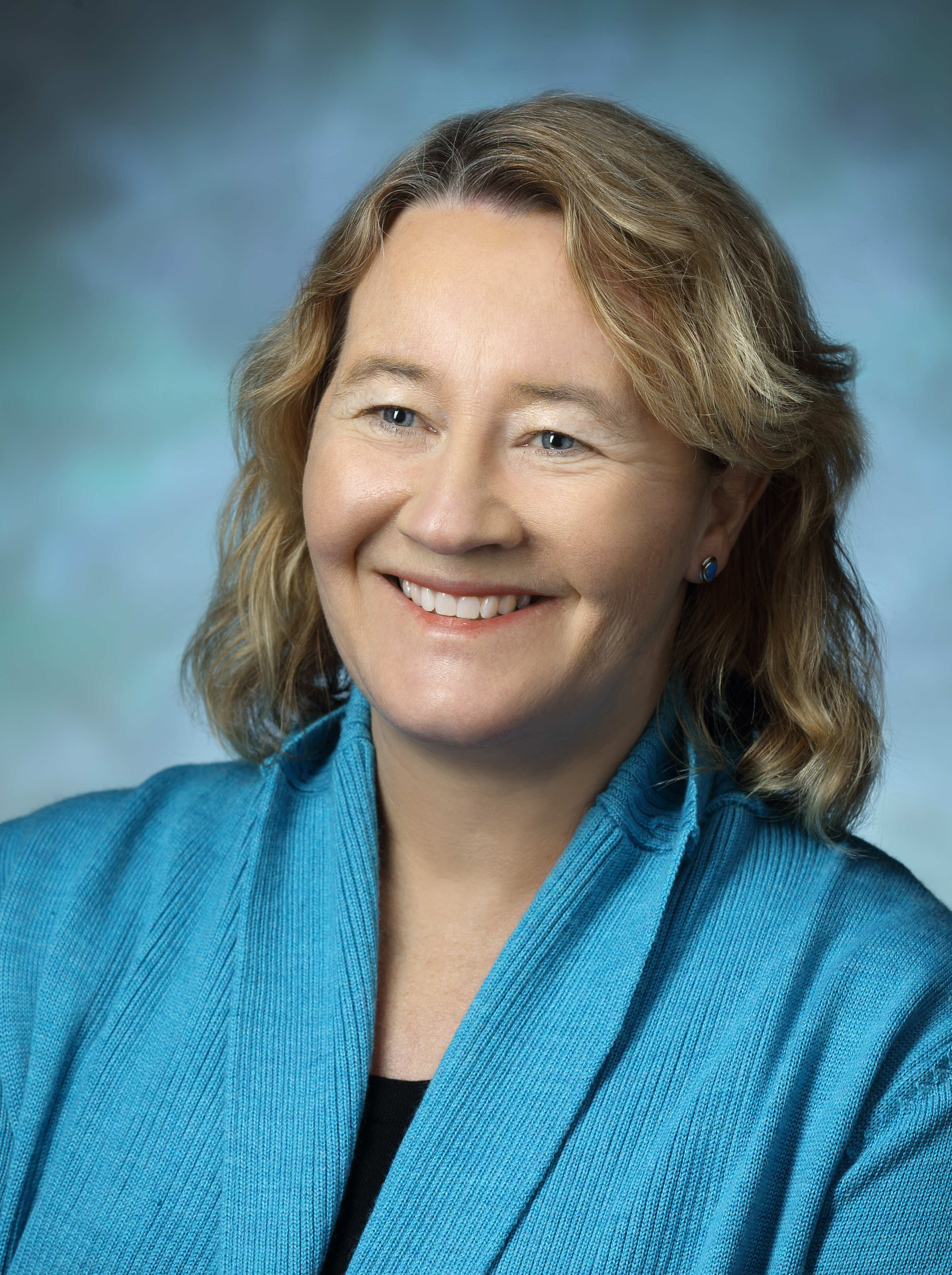
The portrait has an individual Wikimedia VRT-confirmed permission record; private correspondence was not accessed. Its required institutional credit, source, license and existing crop are supplied. The photo and its display adaptations are CC BY-SA 4.0; that license does not apply to the article prose. No payment, partnership or endorsement was arranged. Send documented corrections to info@rachorg.org. Material revisions will be dated. Narrative count includes section headings and excludes navigation, citations, methodology and sources.
Sources
- Carol Greider faculty profile, UC Santa Cruz. Current Distinguished Professor appointment and research program; checked October 13, 2026.
- Biographical, Carol Greider / Nobel Prize. 2009 first-person recollections; early life and independent appointment, not a current institutional profile.
- Biography of Carol W. Greider, PNAS. 2005 independent biographical reporting. Accessible indexed passages checked; full archive access was intermittent.
- Going Her Own Way, Mitchell Leslie / Lasker Foundation. November 27, 2024 independently authored profile and interview. The foundation previously honored the subject.
- Advanced information: the 2009 Nobel Prize in Physiology or Medicine, Nobel Assembly. Historical scientific attribution and predecessors; not clinical evidence.
- Identification of a specific telomere terminal transferase activity in Tetrahymena extracts, Carol Greider and Elizabeth Blackburn / Cell. 1985 experimental paper; abstract and bibliographic record.
- The telomere terminal transferase of Tetrahymena is a ribonucleoprotein enzyme with two kinds of primer specificity, Greider and Blackburn / Cell. 1987 RNA and protein requirements; abstract and record.
- A telomeric sequence in the RNA of Tetrahymena telomerase required for telomere repeat synthesis, Greider and Blackburn / Nature. 1989 RNA-template evidence; distinguish subsequent functional template experiments by other authors.
- Telomeres shorten during ageing of human fibroblasts, Harley, Futcher and Greider / Nature. 1990 cell-culture study, not a human longevity intervention. Publisher access is intermittent.
- Telomere shortening and tumor formation by mouse cells lacking telomerase RNA, Blasco and colleagues / Cell. 1997 mouse study; six generations analyzed, not human efficacy.
- Telomerase mutations in families with idiopathic pulmonary fibrosis, Armanios and colleagues / New England Journal of Medicine. 2007 study: mutations in six of 73 probands. Defined familial population, not all pulmonary fibrosis.
- Diagnostic utility of telomere length testing in a hospital-based setting, Alder, Armanios and colleagues / PNAS. 2018 targeted observational study; decisions changed in nine of 38 cases, not a randomized survival benefit. Authorship contributions checked.
- Human telomere length is chromosome end-specific and conserved across individuals, Karimian and colleagues / Science. 2024 peer-reviewed study; distinguished from the older preprint and a newer 2026 protocol.
- New study reveals unexpected complexity in human telomere lengths, Mike Peña / UC Santa Cruz. April 11, 2024 institutional research reporting: 147 people, end-specific measurements and sequencing collaborators.
- Nanopore sequencing to measure chromosome end-specific telomere lengths in human cells, Groot, Karimian, Rechsteiner and Greider / bioRxiv. August 2026: indexed page says August 18, repository API August 20. Exact posting-date discrepancy unresolved. Full text inaccessible during this reporting run; protocol description relies on repository abstract and metadata, not an independent methods audit.
- Repository metadata for the 2026 Telomere Profiling protocol, bioRxiv API. Checked October 13, 2026: version 1, August 20 posting date, no linked journal publication. Indexed page gives August 18 instead; discrepancy disclosed.
- Publications, Greider Laboratory. Official but incomplete publication list checked alongside repository records; not treated as an exhaustive current bibliography.
- Carol Greider: Nobel Prize-winning rogue biologist, Brian Stallard / Cold Spring Harbor Laboratory. 2020 institutional history; notebook setbacks, community building and workforce meeting. Autobiographical chronology takes precedence over imprecise training terminology.
- Working Group on Changing the Culture to End Sexual Harassment, NIH Advisory Committee to the Director. Historical membership and 2019 recommendations; participation is not evidence of implementation or measured harm reduction.
- Nobel Prize winner Carol Greider to join UC Santa Cruz faculty, University of California. 2020 appointment and historical Johns Hopkins service. Current role verified separately.
- FDA approves imetelstat for low- to intermediate-1 risk myelodysplastic syndromes with transfusion-dependent anemia, US Food and Drug Administration. June 6, 2024 approval; defined indication, trial endpoints and adverse effects. Not an anti-aging approval or a drug attributed solely to Greider.
- First telomerase inhibitor approved, Nature Reviews Drug Discovery. June 14, 2024 independent reporting. Accessible opening corroborates approval; full article access limited.
- GREIDER Carol 2014.jpg, Keith Weller / Johns Hopkins University School of Medicine, Wikimedia Commons. Individual VRT-confirmed permission ticket 2016040810014602 and CC BY-SA 4.0; existing 2016 lossless crop by Adam Cuerden.
- Attribution-ShareAlike 4.0 International, Creative Commons. Portrait license, attribution and modification disclosure; the article prose is not licensed under these image terms.
- Research, Greider Laboratory. Official current research description checked October 13, 2026; yeast and human-cell research.
- The End Game: Discovering How Telomeres Cause Disease, UC Santa Cruz Events. Event held December 11, 2025; page updated February 3, 2026. No recording viewed.
- Manjusha Handa Cancer Research Award, UC Santa Cruz Physical and Biological Sciences. Historical 2024–25 award project for Tereza Shea; not a verified current staff appointment or clinical result.
- Public bibliography, Carol Greider / NCBI. Supplementary publication discovery; no claim of exhaustive coverage.
- Earlier preprint record for chromosome-end telomere profiling, Karimian and colleagues / PubMed. Competing-interest disclosure identifies Greider and Karimian on patent application PCT/US2023/073375. No granted-patent or income claim is made.
- Carol W. Greider: Facts, Nobel Prize. 2009 award shared with Blackburn and Szostak; historical affiliation at award time.
- Lessons From Yeast: Mechanisms of Telomere Length Regulation, Rini Mayangsari and Carol Greider / Annual Review of Genetics. Review in Advance first posted June 25, 2026; abstract and publication record checked October 13. Full text not independently reviewed.
- Carol Greider, Professor Emerita, Johns Hopkins Department of Molecular Biology and Genetics. Current institutional emerita listing checked October 13, 2026.