
RACH Profiles · Longevity and Biotechnology
Drew Weissman: The Immunologist Who Helped a Message Become Medicine
From hands-on curiosity and medical training to an unlikely RNA partnership, a global vaccine platform, and the unfinished work of access.
- Current roles
- Roberts Family Professor in Vaccine Research; director, Penn Institute for RNA Innovation.21
- Focus
- Immunology, RNA delivery, vaccines, and research capacity.
- Evidence boundary
- Cell and animal experiments, clinical evidence, public recollections, and future goals are distinguished.
Why RACH recognizes Drew Weissman
RACH—Recognizing the Achievements and Contributions to Humanity—recognizes Drew Weissman for helping turn an immunological obstacle into a usable medical technology. With Katalin Karikó and other collaborators, he established how modifying RNA could reduce unwanted inflammatory responses. Their work became an important foundation for the Pfizer-BioNTech and Moderna COVID-19 vaccines, rather than a complete vaccine invented by two people alone.1, 9
The distinction matters. Recognition belongs alongside the contributions of delivery scientists, vaccine designers, clinical investigators, manufacturing workers, health professionals, and trial participants. It does not require claiming that every disease in a research portfolio has been conquered. Nor does a Nobel Prize settle questions about safety, access, or financial interests.
Weissman’s life offers a particularly useful view of the distance between a laboratory finding and a public benefit. He trained as a physician and an immunologist, entered a collaboration that crossed disciplinary boundaries, and remained involved long after its most famous experiment. The public value lies in that documented work. The unfinished part is making future applications effective, safe, and available to people who cannot simply purchase their way to the front of a queue.
Curiosity, with constraints
Born in Lexington, Massachusetts, on September 7, 1959, Weissman later described a childhood shaped by curiosity about how things worked. In a Nobel interview published in 2024, he recalled taking household objects apart and moving on to electronics, circuit boards, speakers, and radios. These are his memories, not scenes reconstructed by RACH.1, 2
The same conversation contains a less familiar part of his story. He said he developed type 1 diabetes at five and learned to manage insulin and eating under the limitations of treatment at the time. He also recalled a summer researching diabetes during college, while ultimately choosing immunology as his field.2
It would be too easy to make the illness explain every later decision. His own account does not support so tidy a cause. What it does supply is a childhood in which scientific curiosity and the practical demands of health coexisted. His eventual profession joined medicine to investigation without reducing either to a single personal origin story.
The teenager making mirrors
The National Inventors Hall of Fame’s biography describes a young person interested in sports and martial arts as well as science. During high school, he worked at his father’s company making optical mirrors for satellites. The detail gives the later laboratory career a material beginning: precision was something practiced with objects, not only encountered in textbooks.3
Manufacturing a component and studying an immune cell are different activities, but both demand attention to what actually happens when a design meets the physical world. That connection is an interpretation, not a claim that the mirror business predetermined his research. The biography becomes more interesting when it leaves room for contingency.
A future Nobel laureate can be described retrospectively as if each childhood activity were preparation for Stockholm. At the time, these were ordinary commitments: school, work, interests, and learning. Their significance is not that they foretold an award. They show a person acquiring habits of making and examining things before anyone could know what those habits might eventually make possible.
A laboratory, an education, a relationship
Weissman attended Brandeis from 1977 to 1981. Returning for its 2023 commencement, he identified Gerald Fasman’s biochemistry laboratory as a place where his scientific interest deepened. He also emphasized critical thinking, collaboration, and openness to people and ideas beyond his own starting assumptions.4
His speech included a personal memory: meeting his future wife while tutoring her in calculus. The anecdote belongs to a public account he chose to share, not to a private life RACH has investigated. Its place in the biography is simple. A university education was a setting for durable human relationships as well as a route to qualifications.
He completed bachelor’s and master’s degrees in 1981. The combined training matters less as an impressive line on a résumé than as the beginning of sustained research experience. An undergraduate who had enjoyed taking things apart was now learning how to formulate questions that an experiment could answer. Teachers, laboratory colleagues, friends, and family were part of that transition; the later prominence of one graduate does not erase the setting that helped form him.3, 4
Choosing medicine without leaving research
At Boston University, Weissman pursued an MD and a PhD, completing both in 1987. His graduate work centered on immunology and microbiology. Boston University’s retrospective places the training between his early life in Massachusetts and his later vaccine research, but the combined degrees should not be mistaken for an inevitable route to one particular discovery.5
Medicine asks what is happening to a patient and what can be done. Experimental biology can ask a narrower question about a mechanism, sometimes with no immediate treatment in view. Physician-scientist training creates room for both, while also exposing the distance between understanding a process and changing a person’s outcome.
That distance would define much of Weissman’s career. The research for which he became famous was not a clinical success when it first appeared. It was evidence about how cells responded to RNA. Looking backward from vaccination campaigns can obscure how much work still separated that finding from a medicine. His education helps explain the two worlds he inhabited without implying that a medical degree itself guaranteed the bridge between them.
Learning to ask the immune system a question
After a residency at Beth Israel in Boston, Weissman undertook fellowship training at the National Institute of Allergy and Infectious Diseases under Anthony Fauci. A 2024 interview in Pathogens and Immunity documents that sequence and his move to the University of Pennsylvania in 1997.6
In that interview, he described summer research during college as an important exposure to basic science and recalled being drawn to research during medical training. This was not simply a clinician deciding late in life to enter a laboratory. Investigation had become a central professional commitment early on.
By the time he established his Penn group, he brought experience in immunology to a problem with direct human stakes: vaccine development. That background is essential to understanding the collaboration that followed. Karikó knew RNA’s possibilities and practical difficulties; Weissman knew the behavior of immune cells he hoped to enlist. Neither expertise made the other redundant. Their productive overlap emerged because the same experimental response could look promising from one perspective and troublesome from another.
The encounter that needed eight years
Weissman told Boston.com in 2025 that he arrived at Penn after seven years studying HIV and dendritic cells in Fauci’s laboratory. He met Karikó at a photocopier, where conversations about research became a collaboration. The now-famous machine is a memorable detail, but the eight years between that meeting and the 2005 paper are the more consequential part of the account.7
A chance conversation did not deliver a finished technology. It brought together two people able to keep asking why an initially attractive approach behaved badly. In Weissman’s retrospective, the unexpected inflammation caused by RNA prompted the investigation of modified nucleosides. The obstacle became a research question instead of merely a reason to abandon the material.
The lesson is not that persistence always wins. Many persistent projects fail, and a later award cannot prove that every early judgment against a proposal was unreasonable. Here, however, continued experimentation produced a specific, testable explanation. The partnership mattered because it generated evidence, not because perseverance is automatically a substitute for evidence.
One response, two interpretations
The Lasker Foundation’s account makes the difference in the collaborators’ interests unusually clear. Weissman wanted an HIV vaccine. Karikó was interested in using RNA to make therapeutic proteins. When RNA activated dendritic cells, the response initially looked useful to a vaccine researcher but problematic for protein replacement, where unwanted inflammation could undermine the intended treatment.8
They compared RNA from different sources. The differing responses suggested that chemical features of RNA, rather than its presence alone, helped determine how immune cells reacted. The familiar story of a single brilliant idea is less informative than this sequence of comparison and revision.
Their joint work also shows why collaboration is more than dividing a task between two specialists. They did not begin with identical goals. The useful question emerged at the point where those goals encountered the same result. Instead of deciding that one interpretation must simply defeat the other, they investigated the mechanism that could make sense of both. A productive disagreement became part of the method.
What the 2005 paper actually established
The 2005 Immunity paper was authored by Katalin Karikó, Michael Buckstein, Houping Ni, and Drew Weissman. It examined RNA recognition by Toll-like receptors and the effects of incorporating modified nucleosides. Dendritic cells exposed to modified RNA produced fewer inflammatory signals and activation markers than cells exposed to unmodified RNA in the tested systems.9
This was a mechanistic finding, not a trial showing protection against COVID-19, a disease that had not yet emerged. It helped explain how the immune system could respond differently to RNA with different chemical characteristics. The work opened a route toward making RNA a more useful carrier of instructions.
Precision in describing the result protects the achievement from exaggeration. The scientists did not discover messenger RNA, invent immunity, or eliminate every possible inflammatory effect of a future vaccine. They identified a consequential part of a difficult problem. Naming Buckstein and Ni alongside the two eventual laureates also restores the paper’s actual authorship to a story often compressed into an award citation.
A quieter message still had to work
Reducing an unwanted response would have meant little if the altered RNA could no longer perform its intended job. In 2008, Karikó, Hiromi Muramatsu, Frank Welsh, János Ludwig, Hiroki Kato, Shizuo Akira, and Weissman reported experiments testing pseudouridine-containing RNA in cells and mice. The modified material supported greater protein production than the unmodified comparison under the studied conditions.10
That result addressed a second practical question. An RNA medicine must both reach a cell and be read well enough to produce a useful amount of its encoded protein. A modification that merely reduced inflammation, without preserving that function, would not have supplied the same opportunity.
Again, these were experimental systems rather than proof of a safe treatment for every patient. Their place in the life story is the work after the celebrated insight: testing whether a promising explanation could survive another requirement. The chronology resists the notion that discovery ends when a mechanism is named. For Weissman and his colleagues, the next question followed directly from the answer to the previous one.
The problem inside the preparation
In 2011, Karikó, Muramatsu, Ludwig, and Weissman described another limitation. Laboratory production could leave contaminants, including double-stranded RNA, that stimulated immune responses even when the intended RNA contained modified nucleosides. Their study used high-performance liquid chromatography to remove these impurities and improve translation in the experimental cells.11
This is the kind of advance that disappears from a simplified origin story. Changing a molecule and controlling the quality of a preparation are distinct achievements. A promising design can be undermined by what accompanies it, and a method that works once must eventually become a process that produces consistent material.
The purification paper also makes the work look less like an argument won by force of conviction. Its contribution was an adjustment grounded in measurements: identify a residual problem, test its source, and evaluate a way to reduce it. The finding did not finish the clinical journey. It made one part of that journey more technically credible and demonstrated why the years between an initial paper and a usable platform were not empty waiting time.
The message needed a vehicle
RNA also needed protection and a means of entering cells. A 2015 paper led by Norbert Pardi examined the expression of nucleoside-modified RNA delivered in lipid nanoparticles to mice through different routes. Its author list included Muramatsu, Karikó, Barbara Mui, Ying Tam, Thomas Madden, Michael Hope, and Weissman, among others.12
The experiment belongs to the delivery side of the story. A molecular instruction is not useful merely because it exists; location, duration, and the route by which it arrives help determine what it can do. The work connected RNA chemistry to the practical behavior of a delivery system.
It also makes shared credit unavoidable. The familiar pairing of Karikó and Weissman does not contain all the expertise required to make an RNA product function. Scientists working on lipid formulations supplied essential capabilities. Treating the carrier as a minor accessory would misrepresent the technology as surely as overlooking the RNA modifications. The future vaccines depended on a combination, and the combination had a much wider community of contributors.
A rehearsal without foreknowledge
In 2017, Pardi, Michael Hogan, Rebecca Pelc, Weissman, and a large international team reported a modified-mRNA vaccine candidate against Zika virus. A single low-dose immunization protected mice and rhesus macaques in the experiments described. The paper’s collaborators included Theodore Pierson, Barton Haynes, Barney Graham, Scott Hensley, and specialists in lipid delivery.13
This was not evidence that the candidate prevented congenital disease in humans. The authors identified further questions, including protection against fetal infection. Its importance to the later COVID-19 story is narrower and stronger: before the pandemic, researchers had already assembled and tested an RNA-based vaccination approach in animals.
Calling that work preparation does not mean its authors foresaw the exact emergency to come. They were responding to an existing scientific and public-health problem. When a new virus appeared, parts of the technical foundation were available because people had pursued other questions earlier. Basic and translational research can create that kind of readiness without a precise prediction of the event that will make it urgently useful.
A history larger than its laureates
Elie Dolgin’s 2021 Nature history begins decades earlier, with experiments in which RNA and lipid materials enabled protein production in cells. Its central framing is collective: hundreds of researchers contributed before the pandemic made the field widely visible. The accessible record also carries a correction concerning protein-design history and early patent filings.14
That is a useful warning for any biography. A narrative needs a person to follow, but the underlying technology does not acquire a single author because a story requires a central character. Earlier discoveries, competing approaches, delivery methods, manufacturing knowledge, and later clinical work remain part of the explanation.
Weissman’s contribution is not diminished by that context. It becomes more identifiable. He helped solve particular immunological and practical problems within a much larger scientific enterprise. Recognition is most credible when it names those problems and shows how the evidence changed, rather than assigning one person ownership of every subsequent benefit. A laureate’s life can illuminate a field without standing in for everyone who built it.
The point at which people entered the evidence
The initial Pfizer-BioNTech trial, reported by Fernando Polack and colleagues in 2020, randomized more than 43,000 participants. Among the relevant participants, there were eight COVID-19 cases beginning at least seven days after the second dose in the vaccine group and 162 in the placebo group. The reported efficacy was 95 percent for that endpoint and observation period.15
Those numbers should not be turned into a timeless promise about every later variant or every recipient. They describe a particular trial. They also mark a decisive change in the evidence: this was no longer only a result in cells or experimental animals.
The clinical investigators, volunteers, BioNTech and Pfizer development teams, and people who produced and delivered the trial material belong in the achievement. Weissman’s earlier work helped make the platform possible; he did not personally perform all of the work that established this product’s benefit. The public outcome was produced through that chain of contributions, each requiring its own expertise and its own evidence.
A second product, a separate test
The Moderna COVE trial, led in its published report by Lindsey Baden and colleagues, enrolled 30,420 volunteers across 99 United States centers. Its initial analysis recorded symptomatic COVID-19 in 185 placebo recipients and 11 vaccine recipients, yielding 94.1 percent efficacy for the defined endpoint. All 30 severe cases in that analysis occurred in the placebo group.16
The trial also recorded more transient reactions after vaccination. Its findings supported a substantial benefit under the conditions studied, not a guarantee that adverse events were impossible or that protection could never change.
Two products using related scientific foundations still required separate development and evaluation. The NIH, public funders, corporate teams, clinicians, and participants were not interchangeable details. They were the institutions and people through whom a laboratory possibility became a tested intervention. That is the demonstrated human contribution at the center of RACH’s recognition: enabling work that others could develop into vaccines with meaningful clinical results, while leaving the credit for those results distributed across the people who established them.
Success did not end measurement
The 2021 six-month follow-up of the Pfizer-BioNTech trial reported continued protection but also a gradual decline in efficacy. It is a reminder that the first announcement was a checkpoint, not the final measurement. Results have to be read with their population, circulating viruses, endpoints, and follow-up period in view.17
Safety also required continued attention. In June 2025, the FDA expanded labeling information about myocarditis and pericarditis after mRNA COVID-19 vaccination. Its communication identified the highest observed risk in males aged 12 through 24 and discussed unresolved questions about the significance of persistent cardiac-imaging findings in some affected patients.18
A biography honoring an enabling technology should include this evidence rather than treating it as incompatible with recognition. Benefits and risks can coexist; describing one does not erase the other. This article is not a vaccination recommendation or individualized medical advice. Its purpose is to distinguish an important contribution from an impossible claim of universal, permanent, risk-free success.
Who can build the next vaccine?
The Thai ChulaCov19 program provides a concrete example of collaboration beyond the best-known Western manufacturers. Its 2022 phase I report names Sivaporn Gatechompol and Wonngarm Kittanamongkolchai as equal first authors, with Kiat Ruxrungtham, Chutitorn Ketloy, Eakchai Prompetchara, Weissman, and the ChulaVAC-001 team among its contributors.19
The open-label study enrolled 72 volunteers and examined safety and immune responses at different doses. It reported encouraging immunogenicity and tolerability within that small study. Those findings did not establish population-level protection from disease or prove that access problems had been solved.
Its significance is nevertheless tangible: researchers and participants in Thailand were developing and testing a candidate, not merely waiting to receive a finished product from elsewhere. Credit for that capability belongs to local scientists, institutions, clinical teams, and volunteers as well as international collaborators. In a life story about contribution to humanity, the distinction between helping another team build capacity and taking credit for its work is fundamental.
Recognition, ownership, and interests
The scientific achievement also generated commercial value. In October 2023, the Philadelphia Inquirer reported that Penn had received exceptionally large licensing revenues, citing the university’s reported fiscal-year figures and the importance of vaccine-related intellectual property. Institutional revenue is not a verified statement of an individual scientist’s wealth.20
More recent disclosures require equal care. A 2026 hepatitis C paper reports BioNTech support for Weissman, several equity interests, a board-and-equity relationship with Versatope Therapeutics, and patent interests. These disclosures are relevant context for evaluating his research and public claims; they are not evidence of misconduct.24
It would be misleading to portray the story as entirely outside commerce. It would be equally misleading to assume that a commercial interest invalidates an experimental result. The appropriate response is transparency, scrutiny of methods, and independent evaluation. RACH’s recognition is not an endorsement of a company, a security, or a product. The public rationale remains the documented scientific contribution, with financial context visible rather than edited out.
What he is working on now — October 5, 2026
Penn’s current laboratory page identifies Weissman as the Roberts Family Professor in Vaccine Research and director of the Penn Institute for RNA Innovation. It describes continuing work on vaccines and protein therapeutics, including targeted delivery and gene-editing applications. These are research directions, not a list of established treatments.21
One concrete 2026 project revisits the delivery problem. A Science Advances paper published March 27 investigates a one-component carrier made from ionizable amphiphilic Janus dendrimers. Nathan Ona, Elena Atochina-Vasserman, Virgil Percec, Weissman, and colleagues contributed to this work. Penn’s June 23 announcement describes a norovirus-related mouse experiment and refrigerated stability observations.22, 23
The hoped-for advantage is simpler production and distribution. That hope has not yet become a demonstrated human health outcome. Further preclinical evaluation and clinical testing remain necessary. The dates matter too: a recent appearance on an institutional news list does not make a March paper a new October breakthrough. The project is current work worth following because it addresses practical access barriers, not because those barriers have already disappeared.
The current chapter still contains uncertainty
A hepatitis C vaccine study published online July 22, 2026, with an August issue date, provides another specific checkpoint. Erin Reagan and colleagues, including Weissman, investigated an optimized mRNA construct in mice. The study reported stronger antibody responses and explicitly identified further investigation as necessary before translation to humans.24
On October 2, Philadelphia’s 6abc published a new Overheard program page featuring Weissman in conversation with Ajay Raju. Its written summary emphasizes vaccine preparedness and international research capacity. RACH treats that as evidence of a recent public discussion, not independent validation of every clinical statement summarized by the broadcaster.25
The distinction is especially important when an interview compresses several products and stages of research into a few sentences. A completed trial, a promising cancer study, and an approved treatment are different things. This profile does not adopt the program summary’s broad cancer or pan-coronavirus claims as established clinical outcomes. A prominent scientist’s optimism can be newsworthy without becoming the evidentiary standard for a recognition article.
The contribution is real; the work is unfinished
Weissman’s story does not end cleanly at the Nobel ceremony. It runs from practical curiosity and medical training through experiments that required years of refinement, then outward into clinical development, manufacturing, regulation, public debate, and access. At each stage, the number of people necessary to the outcome grew.
The life is compelling partly because its most famous result was not the problem with which he began. An interest in immunology and HIV vaccine research helped produce a platform later used against a different virus. That is not proof that science should operate without priorities. It is a reason to value knowledge whose eventual use cannot be specified completely in advance.
RACH recognizes the contribution without granting immunity from criticism. Future claims must still survive experiments, clinical evaluation, safety monitoring, and the test of reaching people. The fairest tribute is neither a solitary-hero story nor a catalogue of possibilities presented as cures. It is an account of a scientist whose work helped others accomplish something consequential—and whose continuing ambitions remain obligations to gather evidence, share credit, and make benefit more widely achievable.
Methodology, disclosure, and corrections
This independent public-record biography was researched, written, and internally checked with AI assistance. No interview, outreach, subject approval, or separate human editorial review is claimed. Recollections are attributed; interpretive connections are RACH’s. No private scenes, dialogue, or motives have been invented. Reporting cutoff: October 5, 2026.
Official laboratory and institute pages, publication records, recent papers and public interviews were checked. Some original pages were inaccessible through the research reader; indexed primary abstracts were used and identified in the source notes. The complete Nature historical feature and the complete October 2 interview video were not reviewed. A preprint search surfaced an August 2026 pan-betacoronavirus manuscript, but inaccessible full text prevented substantive use. A complete authenticated personal social feed could not be established; no comprehensive social-media audit is claimed. The current-work section is selective, not an exhaustive bibliography.
The hepatitis C paper’s disclosures report BioNTech support; equity relationships involving Arcturus, MasterSwitch, Zipcode Bio, Medici, Versatope, and Zelig; Versatope board membership; and patent interests. These are paper-specific disclosures, not an independently audited complete current portfolio. No payment, partnership, endorsement, or commercial arrangement with Weissman or these organizations was arranged. Recognition does not constitute medical advice or product endorsement.
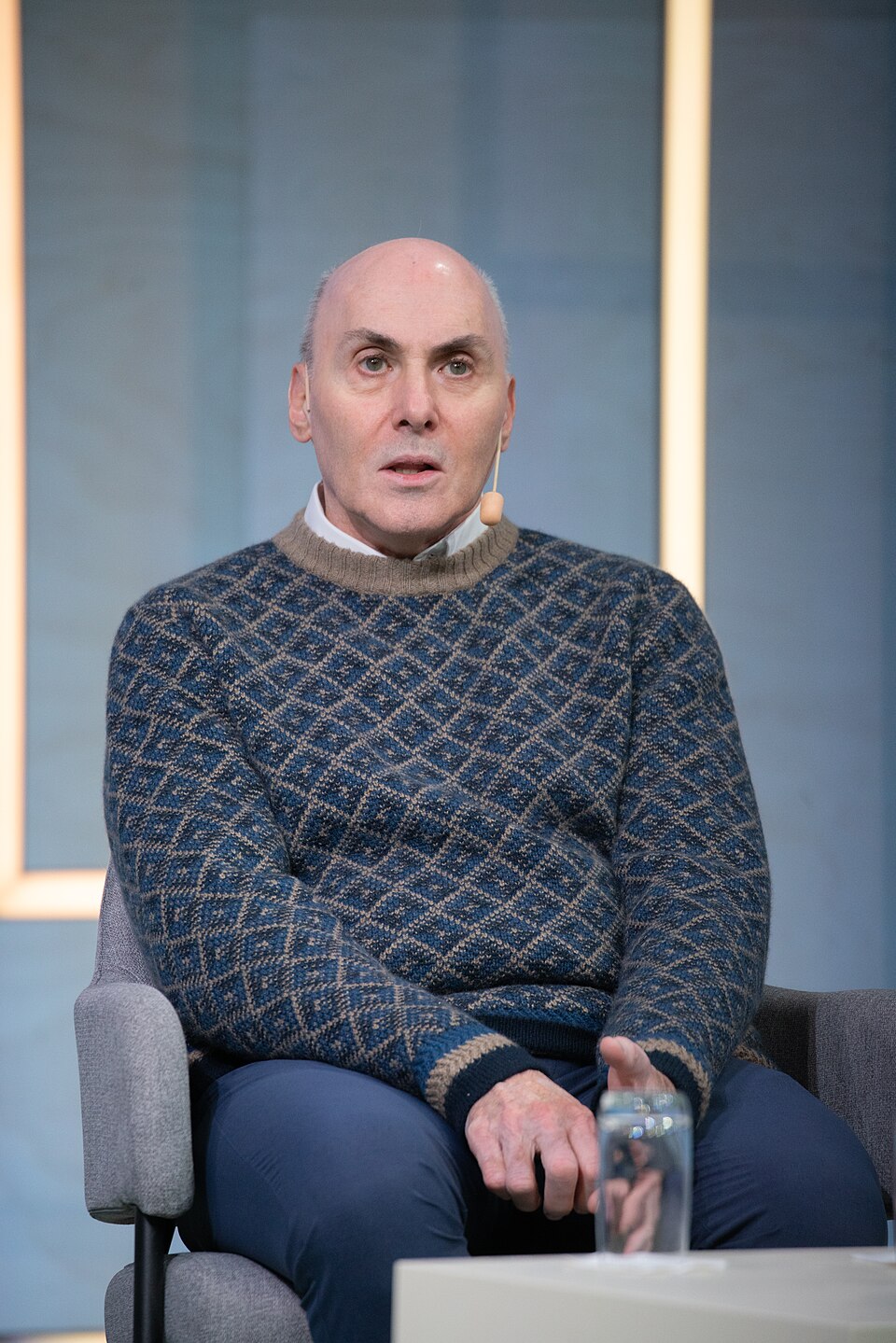
Portrait provenance was checked against the creator’s own-work upload, file history, photographer account, and matching copyright metadata. The image and its display adaptations are CC BY-SA 4.0; that license does not apply to this article. Send documented corrections to info@rachorg.org. Material revisions will be dated. Narrative word count excludes navigation, citations, methodology, and sources.
Sources
- Drew Weissman — facts, Nobel Prize. Historical award and birth record.
- Nobel Prize Conversations: Drew Weissman, Nobel Prize. June 13, 2024 transcript; childhood recollections attributed.
- Drew Weissman — inventor biography, National Inventors Hall of Fame. Education, early interests and optical-mirror work.
- Embrace the Remarkable Potential of Science, Brandeis University. 2023 commencement transcript; personal recollections.
- BU alum Drew Weissman wins Nobel Prize, Boston University. October 2, 2023 institutional profile.
- Interview with Drew Weissman, Pathogens and Immunity. 2024 interview; training chronology and research orientation. Indexed text consulted where reader access failed.
- Q&A: vaccine development and preparedness, Darin Zullo / Boston.com. March 24, 2025 interview; retrospectively attributed.
- Modified mRNA vaccines, Lasker Foundation. 2021 award essay and acceptance remarks; not a current safety summary.
- Suppression of RNA recognition by Toll-like receptors, Karikó, Buckstein, Ni and Weissman / Immunity. 2005 primary experimental paper.
- Incorporation of pseudouridine into mRNA, Karikó and colleagues / Molecular Therapy. 2008 cell and mouse research.
- Generating the optimal mRNA for therapy, Karikó, Muramatsu, Ludwig and Weissman / Nucleic Acids Research. 2011 purification study.
- Expression kinetics of modified mRNA in lipid nanoparticles, Pardi and colleagues / Journal of Controlled Release. 2015 mouse delivery study.
- Zika virus protection by a single low-dose vaccination, Pardi and colleagues / Nature. 2017 mouse and rhesus-macaque experiments, not human efficacy.
- The tangled history of mRNA vaccines, Elie Dolgin / Nature. September 14, 2021; accessible introduction, bibliography and October 22 correction checked; paywalled body not represented as fully read.
- Safety and efficacy of BNT162b2, Polack and colleagues / New England Journal of Medicine. 2020 initial randomized trial; historical endpoints and follow-up.
- Efficacy and safety of mRNA-1273, Baden and colleagues / New England Journal of Medicine. Initial COVE trial; published online December 2020, January 2021 issue.
- Safety and efficacy of BNT162b2 through six months, Thomas and colleagues / New England Journal of Medicine. 2021 follow-up; efficacy waned during the observed period.
- Updated myocarditis and pericarditis warning, US Food and Drug Administration. June 25, 2025 safety communication; not individualized medical advice.
- ChulaCov19 phase I trial, Gatechompol and colleagues / Nature Microbiology. 2022 safety and immunogenicity study; 72 participants, not a disease-efficacy trial.
- Nobel-winning research and Penn licensing revenue, Abraham Gutman / Philadelphia Inquirer. October 3, 2023 independent institutional-finance reporting.
- The Weissman Lab, University of Pennsylvania. Current role and research directions checked October 5, 2026; goals are not clinical outcomes.
- One-component delivery platform, Ona and colleagues / Science Advances. March 27, 2026 paper, DOI 10.1126/sciadv.adv1554; indexed abstract and author-contribution record checked.
- New mRNA platform could expand global access, Penn Medicine. June 23, 2026 institutional announcement of preclinical research; not a new October result.
- Hepatitis C vaccine encoding p7, Reagan and colleagues / Vaccine. Online July 22, 2026; August 13 issue. Mouse findings and financial-interest disclosures.
- Overheard with Ajay Raju: Drew Weissman, 6abc Philadelphia. October 2, 2026 program page and written summary; full video not independently transcribed.
- Drew Weissman portrait, John Sears / Wikimedia Commons. December 9, 2024 own-work photograph; uploader, file history and copyright metadata checked.
- Photographer account, John Sears. WikiPortraits photographer account corroborates Nobel-event work.
- Attribution-ShareAlike 4.0 International, Creative Commons. Portrait license, including attribution, change disclosure and share-alike obligations.