RACH Profiles · Longevity and Biotechnology
Mary-Claire King: The Families Behind the Genetic Evidence
A life connecting mathematics, inherited cancer, genetic counseling, and the search for identities stolen by a dictatorship—with the families and collaborators kept in view.
- Current role
- Professor of Medical Genetics and Genome Sciences; American Cancer Society Professor, University of Washington.[1]
- Focus
- Inherited cancer, complex genetic conditions, and genetics in the service of human rights.
- Evidence boundary
- Clinical possibilities, observational findings, cellular experiments and screening advocacy are distinguished. No medical advice.
The pattern in the families
One of Mary-Claire King’s most consequential discoveries began with a change in how her team looked at families. In a later interview, she described Beth Newman arranging long pedigrees by the average age at which relatives developed breast cancer. The younger-onset families began to reveal a pattern that had been obscured when different families were treated as though they all carried the same biological problem. The arrangement helped the researchers see where to look.[10]
It is an unusually revealing entrance into King’s life. The crucial object was not a machine operating beyond human comprehension. It was a record of relationships, illnesses, ages, and losses, painstakingly assembled and then reconsidered. A family history could contain scientific information, but only if researchers respected its differences rather than smoothing them away.
That attention has connected remarkably different chapters of her career: inherited cancer, the identification of children taken during Argentina’s dictatorship, and research with families affected by hearing loss or severe psychiatric illness. Today the University of Washington lists her as a professor in Medical Genetics and Genome Sciences and as an American Cancer Society Professor. Her importance is not that she made every disease predictable. It is that she helped turn particular inherited patterns into evidence people could use.[1]
A mathematical beginning
King was born in 1946 in Evanston, Illinois. Her first academic language was mathematics, not medicine: she graduated from Carleton College in 1966 before undertaking graduate study at Berkeley. The eventual geneticist’s path was therefore not a straight progression from an early certainty about a laboratory career.[1] [4]
In her conversation with Ushma Neill for the Journal of Clinical Investigation, King remembered her father turning baseball into arithmetic. A question about Ernie Banks’s batting average required knowing how many times he had already been at bat. She also credited two women who taught her mathematics in high school. At Berkeley, a course with geneticist Curt Stern helped redirect her from statistics toward genetics.[3]
The baseball problem offers a modest but durable theme: a number is only meaningful when its denominator and history are known. That is RACH’s reading of the anecdote, not a claim that childhood determined her later discoveries. The same discipline matters when interpreting cancer risks, comparing groups of patients, or asking whether a striking result applies outside the family in which it was found.
The scientist who nearly left science
Graduate school did not unfold as an uninterrupted demonstration of brilliance. In a Lasker Foundation account, King recalled experiments that repeatedly failed and a period when work for Ralph Nader’s California Project offered another direction. Allan Wilson, her adviser, helped her reshape her doctoral work around an approach that made better use of her mathematical abilities. She completed her genetics doctorate in 1973.[1] [5]
The resulting research with Wilson became the 1975 Science paper Evolution at Two Levels in Humans and Chimpanzees. Comparing proteins through several methods, they examined how close the two species appeared at the molecular level despite substantial differences in anatomy and behavior. They proposed that changes in gene regulation could be important to that contrast.[6]
This was not a modern comparison of two fully sequenced genomes. Describing it that way would import a later technology into an earlier question. The paper’s force lay in connecting different levels of biological explanation: similarities in molecular components did not automatically explain similarities or differences in whole organisms. That willingness to question what a measurement actually captured would remain central to King’s work.[6]
Science outside the laboratory
In a 2025 conversation with Science Friday’s Flora Lichtman, King described teaching genetics, statistics, and evolution in Chile through an exchange programme in the early 1970s. The military coup of September 1973 transformed the circumstances of that work. She recalled leaving on Christmas Day that year. The experience belongs to the biography as a direct encounter with political violence, not as a retrospective explanation for every later decision.[7]
Her official chronology then records postdoctoral work at the University of California, San Francisco, from 1974 to 1976, followed by a Berkeley faculty career lasting until 1995. Those dates anchor a period often compressed in celebratory profiles into a single moment of choosing cancer research.[1]
Getting the faculty position also involved other people. King’s Lasker account credits graduate student Cathy Schaefer, who participated in the search process, with helping open a route to the job. The interview process is associated with 1975 in her recollection; the university biography dates the faculty appointment from 1976. Keeping those records distinct is more accurate than manufacturing a conflict between them.[5]
Keeping a research life going
The infrastructure of a scientific career includes more than appointments and equipment. In a public Moth story, King recounted a difficult week in 1981 when family upheaval and a collapsing childcare arrangement threatened a Washington grant interview. At the airport, baseball player Joe DiMaggio helped her and her young daughter negotiate the trip. She remembered getting to the interview and its going well. This is her published recollection, not a scene RACH witnessed or independently reconstructed.[8]
The episode is worth retaining without repeating intimate details about other family members. It interrupts the polished sequence of degree, paper, and discovery. A researcher can have a compelling scientific question and still need someone to help with a child, a journey, or a few unmanageable hours. The eventual publication record rarely records that dependence.
King’s later prominence should not erase this ordinary contingency. Nor should the story make endurance sound effortless. The interesting point is that serious work can depend on small acts of assistance whose value cannot be found in a citation index. That recognition of dependence is particularly appropriate in a career built around families who agreed to share difficult histories.
From suspicion to a testable model
Families had noticed patterns of breast cancer long before a molecular explanation became possible. King was not the first person to observe that relatives could develop the same disease. Her group’s contribution was to make a specific inherited explanation testable, while recognizing that it would not explain every case.[14]
A 1988 paper by Beth Newman, M. A. Austin, Ming K. Lee, and King examined 1,579 nuclear families. Its statistical analysis supported an autosomal-dominant model for susceptibility in a subset of families. That was an argument about patterns of transmission, not the identification of a particular DNA sequence. The distinction mattered because a persuasive model could guide the search without completing it.[9]
For a reader outside genetics, the challenge can be put simply: the same diagnosis need not have the same inherited cause. If researchers combine families whose cancers arise through different mechanisms, a real signal can become difficult to detect. Conversely, selecting only the most striking families can make a risk estimate look more universal than it is. King’s programme worked within that tension between finding a pattern and defining where it held.
1990: a location, not yet a cloned gene
The decisive linkage paper appeared in Science in December 1990. Jeff Hall, Ming Lee, Newman, Jan Morrow, Lee Anderson, Bing Huey, and King reported evidence connecting early-onset familial breast cancer to a region of chromosome 17, known as 17q21. The study involved 23 extended families, with 146 breast-cancer cases and 329 participating relatives. The strongest linkage was associated with families with younger ages at onset; other families did not show the same pattern.[11]
The paper combined family investigation with genetic markers. Clinical records and pathology helped establish who had developed which disease. Participants were not interchangeable units in a large database; the relationships among them were part of the evidence. The paper’s families were described as white, a limitation that should remain visible when discussing the reach of the initial finding.[11]
In Jane Gitschier’s interview, King remembered an independent French analysis associated with Gilbert Lenoir corroborating the chromosome 17 result. Replication mattered more than the drama of an announcement: another set of families could support the finding.[10]
The achievement was to narrow the search convincingly. Mapping a susceptibility region made the gene a tractable target, but it was not equivalent to reading that gene’s complete sequence or explaining every consequence of its disruption.
The discovery was larger than one laboratory
In October 1994, a separate consortium published the positional cloning work identifying a strong candidate for BRCA1. The author list began with Yoshio Miki, Jeff Swensen, and Donna Shattuck-Eidens and included P. Andrew Futreal and Mark Skolnick among a large team spanning institutions including the University of Utah, Myriad Genetics, and the US National Institute of Environmental Health Sciences. Their contribution must not be absorbed into a shorthand claim that King single-handedly isolated the gene.[12]
King’s group contributed further evidence that year. A December paper led by Lori Friedman, with Elizabeth Ostermeyer, Csilla Szabo, Patrick Dowd, Eric Lynch, Sarah Rowell, and King, examined inherited mutations associated with breast and ovarian cancer in ten families. It helped confirm the gene’s role through a different set of observations.[13]
Discovery here was a sequence of achievements: recognizing a plausible inheritance pattern, mapping a location, cloning a candidate, and demonstrating relevant mutations. The sequence makes the story more interesting, not less. Competition and independent confirmation could coexist. Credit becomes more accurate when the biography describes what each team actually did rather than turning the entire field into a race with only one legitimate winner.
What changed for people
The National Cancer Institute’s account places the BRCA discoveries within a broader transformation in cancer-risk assessment. An inherited predisposition could become something investigated with a test rather than inferred only from a troubling family history. That change depended on diagnostic laboratories, clinicians, counselors, subsequent studies, and the people who participated in them—not solely on the original linkage finding.[14]
Everyone has BRCA1 and BRCA2 genes; they help repair DNA. Certain harmful inherited variants increase cancer risk. They do not guarantee that cancer will develop, and their implications are not limited to women. Depending on the gene and clinical circumstances, risks can include cancers beyond breast and ovary. The useful information is the particular variant and its interpretation, not simply whether a person “has the gene.”[15]
For appropriately assessed patients, this information can inform enhanced surveillance, discussion of risk-reducing measures, and some treatment decisions. Those possibilities involve tradeoffs and professional care. A variant whose significance is uncertain is not equivalent to a known harmful variant. This profile offers no individual testing or treatment recommendation, and it does not assign King a numerical total of lives saved that the reporting cannot establish.[15]
Joan Marks and the meaning of a result
King moved to the University of Washington in 1995. The next chapter brought genetic counseling more visibly into the story. In a tribute written with Jessica Mandell, she recalled Joan Marks and Evelyn Lauder discussing patient-centered genetics during a Central Park walk in 1996. Support from the Breast Cancer Research Foundation helped develop a study, and Mandell joined the work as a newly trained genetic counselor.[1] [16]
The resulting New York Breast Cancer Study became a collaboration among researchers, counselors, clinical partners, and families. Its 2003 paper, by King, Marks, Mandell, and the study group, investigated risks associated with inherited BRCA1 and BRCA2 variants in an Ashkenazi Jewish population. It enrolled 1,008 index cases without making a conspicuous family history a prerequisite.[17]
The study’s population and design matter. Its estimates should not be lifted out of context as an identical prediction for everyone carrying any BRCA variant. More fundamentally, learning a result is not the end of care. A person may need help deciding what to disclose to relatives, what uncertainty remains, and which choices are available. Marks and Mandell belong in this history because translating evidence into a conversation is substantive work, not administrative support.
The question of who can obtain the evidence
As sequencing changed, the laboratory also developed ways to investigate more than one susceptibility gene at a time. A 2010 paper led by Tom Walsh, with Ming Lee, Silvia Casadei, Anne Thornton, Sunday Stray, Christopher Pennil, Alex Nord, Mandell, Elizabeth Swisher, and King, evaluated genomic capture and parallel sequencing across 21 genes. The study tested a technical route toward broader mutation detection; it was not a trial demonstrating that a testing panel itself reduced mortality.[18]
Access was also a legal and economic question. In Alice Park’s 2014 TIME interview, King discussed her opposition to gene patents. Her advocacy belongs in the account, but the legal achievement belonged to a much wider group of plaintiffs, advocates, and lawyers.[19]
In Association for Molecular Pathology v. Myriad Genetics, the US Supreme Court ruled in June 2013 that naturally occurring DNA was not patent-eligible merely because it had been isolated. The opinion distinguished complementary DNA, or cDNA, and did not decide every possible claim involving genetic technology. It is inaccurate to summarize it as a prohibition on all patents connected to genes.[20]
These technical and legal developments illuminate a continuing problem: discovering useful information and ensuring people can obtain it are separate achievements. A biography that stops at the moment a gene is identified leaves much of the public-health story unfinished.
A powerful proposal is not a settled guideline
King has argued for offering testing for established breast- and ovarian-cancer susceptibility genes broadly to women around age thirty, rather than relying only on recognizable family histories. She reiterated that position in her Science Friday interview. It is an advocacy position grounded in her interpretation of the evidence, not a universal recommendation that this profile adopts for its readers.[7]
The US Preventive Services Task Force’s current published BRCA recommendation, dated 2019, uses a more targeted approach. It recommends an initial risk assessment for women with relevant personal or family histories or associated ancestry, followed where indicated by counseling and testing. It recommends against routine assessment, counseling, or testing in women without those associated histories or ancestry. That is a material difference, not a minor footnote.[21]
NCI guidance also emphasizes possible psychological effects, implications for relatives, uncertain findings, and privacy concerns. Genetic counseling helps people consider those consequences before and after testing. A negative result can mean different things depending on what is already known about a family; it is not always an all-clear.[22]
RACH’s recognition leaves space for this disagreement about implementation. Scientific influence includes proposing a change; clinical policy requires evaluating whom it helps, what it costs, what harms it creates, and how a health system can provide the necessary follow-up.
The question the grandmothers brought
In Argentina, the problem ran in the opposite direction: families were searching for children whose identities had been taken from them. The Grandmothers of Plaza de Mayo did not arrive as passive recipients of a scientific rescue. They assembled testimony and records, searched for their grandchildren, and asked whether biology could establish a relationship when the parents were missing.[23] [25]
In a 2025 speech reported by Abuelas, King credited Pierre Darlu with leading the mathematical work behind the grandparentage approach. She recalled going to Argentina in June 1984 to work with local scientists. The early method used inherited blood markers, including HLA, rather than the mitochondrial DNA sequencing often associated with her later forensic work.[23]
The 1984 scientific paper named Ana María Di Lonardo, Darlu, Max Baur, Cristian Orrego, and King. Its authorship is a compact reminder that the method joined Argentine expertise with international collaboration. Neither its mathematics nor its practical application should be credited to one visiting researcher.[24]
For the grandmothers, the question was not abstract ancestry. It was whether evidence could challenge a false account of a child’s origin. The scientific response had to fit into legal proceedings and the difficult human process of restoring an identity. The laboratory could supply evidence; it could not dictate how someone would experience learning it.
Restoration is more than identification
Scholarly histories record the successful use of grandparentage analysis in 1984 and the establishment by law of Argentina’s National Genetic Data Bank in 1987. Relatives voluntarily contributed samples to make future identification possible. Blood-marker approaches were subsequently supplemented and superseded by DNA methods. This institutional continuity mattered because searches could outlast individual researchers or surviving grandparents.[25]
Independent reporting in El País in March 2026 returned to the lives of people whose identities had been restored, including Paula Logares, whose 1984 case was an early landmark. Their accounts make clear that establishing a biological relationship and living with the truth are different experiences. A confirmed result does not erase the losses that made the search necessary.[26]
King’s forensic research also extended to remains. In 1992, Charles Ginther, Laurie Issel-Tarver, and King reported recovering mitochondrial DNA from teeth and comparing sequences with samples from donors or maternal relatives. Their findings supported the use of teeth in identification when other material had deteriorated. Maternal-line evidence is a particular kind of evidence, not a magical identifier independent of relatives, context, or other investigative work.[27]
The contribution to humanity is unusually concrete: genetic knowledge helped people contest imposed identities and investigate disappearances. It also demands restraint. A profile should not republish sensitive family details simply because they are available, or treat the number of cases as a personal score assigned to a scientist.
The ethical questions inside a scientific ambition
King also helped develop the Human Genome Diversity Project, proposed in 1991 to investigate variation across human populations. A 2026 oral-history article by Sohini Ramachandran and Noah Rosenberg revisits that effort with King, Marcus Feldman, and Henry Greely. The authors describe criticism from Indigenous groups, activists, and scholars, including objections to language about disappearing populations. The original funding ambition was not realized, although a shared cell-line resource emerged.[37]
In the interview, King defended the value of studying diversity and praised the project's model ethical protocol. Greely discussed consent involving communities as well as individuals. These are participants' retrospective assessments, not evidence that every objection was resolved. Their account should not substitute for the views of the communities whose samples and histories made the research possible.[37]
This chapter complicates a simple story of science serving humanity. Who defines the question, controls the material, and decides what counts as benefit? Good intentions do not settle those questions. For RACH, they belong alongside the scientific achievement: respecting people means more than including their genetic variation in a dataset. It also means taking their authority and disagreement seriously.
Listening to another set of families
The same family-centered approach appears in research on inherited hearing loss. A 2020 study led by Amal Abu Rayyan investigated 491 Palestinian families, with participants from the West Bank and Gaza. The collaboration included Moien Kanaan, Karen Avraham, Walsh, King, and many other investigators, alongside local hearing-care and educational institutions. Its findings showed substantial genetic diversity behind conditions that might initially receive similar clinical descriptions.[28]
Institutions such as Dar al-Kalima School in Bethlehem and Atfaluna Society for Deaf Children in Gaza helped make participation possible. Their knowledge of families and local circumstances was part of the research infrastructure. Recognizing those contributions avoids turning an international collaboration into an account in which all expertise flows from Seattle.[28]
A 2023 study led by Ryan Carlson, with Walsh, Mandell, clinicians, audiology specialists, and King, examined childhood-onset hearing loss and cochlear-implant outcomes. It included 449 children from 406 families and combined genetic investigation with retrospective clinical information. Associations between genetic diagnoses and outcomes could inform further research and counseling, but this was not a randomized demonstration that assigning treatment by genotype improves every child’s outcome.[29]
There is no need to describe this work as eliminating deafness to explain its value. Better explanations can support informed choices, while those choices remain with people and families whose identities and priorities are not reducible to a laboratory finding.
What she is working on now — October 1, 2026
King’s current UW research page describes efforts to find cancer-predisposition variants missed by earlier approaches. The group is developing long-read DNA and direct RNA sequencing strategies and combining family analysis with Fiber-seq, a method developed by Andrew Stergachis. The focus includes severely affected families who still lack a genetic diagnosis. These are active research directions, not an announcement that every unexplained familial cancer can now be resolved.[2]
A March 2026 paper offers a different current example. Anna Sunshine, Suleyman Gulsuner, C. Andrew Williams, Jon McClellan, King, and colleagues investigated an INO80D variant in a person with schizophrenia. Using patient-derived cells differentiated toward neurons, gene-corrected comparisons, and other experiments, they examined effects on gene expression and neuronal function. Published online March 5, the work supplies mechanistic evidence from cellular models. It is not a demonstrated treatment for schizophrenia or proof that one mutation explains the disorder generally.[30]
Another recent collaboration examined a particular TP53 variant in Palestinian families. The paper by Suhair Lolas-Hamameh, Sari Lieberman, Alaa Sarahneh, Kanaan, Ephrat Levy-Lahad, King, and colleagues appeared online in December 2024 and in the May 2025 JNCI issue. It associated that variant with high breast-cancer risk without the familiar broad pediatric-cancer pattern. The finding is variant-specific and observational; it does not establish that TP53 variants generally carry no childhood risk.[31]
The New York Genome Center also lists King in a senior-associate role, connecting her with neuropsychiatric genetics there. Most immediately, UW has scheduled her seminar (Almost) All Diseases are Genetically Rare for October 2, 2026. At this reporting cutoff it is tomorrow’s event, not a talk already delivered or a newly demonstrated scientific result.[32] [33]
Official institutional and research profiles, the linked publication record, recent papers, and public interview and seminar records were checked. No additional new preprint was verified. A personal professional social feed could not be authenticated and reviewed reliably, and the legacy lab homepage yielded little usable content. This update does not claim access to unpublished work or every current activity.
Why RACH recognizes Mary-Claire King
RACH stands for Recognizing the Achievements and Contributions to Humanity. We recognize King for helping establish the genetic basis of inherited breast cancer and for applying genetic evidence to questions of identity and human rights. Her contribution also includes sustained work with families whose conditions resist easy explanation. The recognition concerns demonstrated research and its uses, not a claim that she cured cancer, reversed aging, or worked alone.
The National Academy of Sciences selected her for its 2025 Public Welfare Medal. The honor reflects a public judgment about her career, but the underlying work is more important than the medal: pedigrees assembled by families and researchers, independent laboratories testing findings, counselors helping people understand results, and grandmothers refusing to let missing children disappear from the record.[34]
There is a line running from the mathematical student who nearly left science to the researcher still investigating unexplained families. It is not the certainty that a single answer will fit everyone. It is the willingness to notice when it does not. King’s most durable example is a practice of making evidence specific enough to matter—and remembering that the people who make it possible remain more than the pattern it reveals.
Methodology, disclosure, and corrections
This independent public-record biography was researched, written, and internally checked with AI assistance for RACH. No interview, contact, subject approval, or separate human editorial review is claimed. Recollections are attributed; interpretive connections are RACH’s. No dialogue, private thoughts or witnessed scenes have been reconstructed.
Reporting cutoff: October 1, 2026. Current UW and New York Genome Center records, the UW-linked bibliography, recent publication records, and public interviews and event listings were checked. The older laboratory homepage provided little usable detail; an authentic personal social feed was not verified. No exhaustive preprint or unpublished-project audit is claimed. Some PubMed requests encountered browser checks; indexed abstracts and publisher records were used where available. The full JNCI TP53 paper was access-restricted; the discussion is limited to its accessible abstract and bibliographic record. The 1984 forensic paper is cited through a bibliographic record and corroborating histories, not presented as a full-text review.
Mapping BRCA1, cloning it, and confirming mutations are credited separately. Clinical claims are bounded by NCI information and the currently posted USPSTF recommendation. This is not medical advice. No personal treatment, genetic-testing decision, or numerical total of lives saved is inferred. King’s institutional affiliations are reported; no comprehensive audit of financial interests is claimed. Recognition is not sponsorship, partnership, a formal award, or endorsement by the subject. No payment or endorsement was arranged.
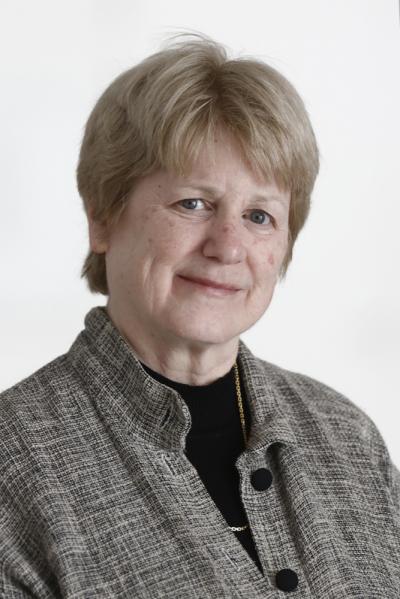
The original portrait permission was checked in an archived EurekAlert press record supplied by Goethe University Frankfurt; the former live image-record URL now returns an error. The archive expressly lists no usage restrictions and credits Uwe Dettmar/Paul-Ehrlich-Stiftung. That permission is not described as public domain or Creative Commons and does not license this biography. Send documented corrections to info@rachorg.org. Material revisions will be dated. Narrative word count excludes navigation, citations, methodology, and source records.
Sources
- Mary-Claire King — Medical Genetics, University of Washington. Current appointments and education; checked October 1, 2026.
- Mary-Claire King — current research, UW Genome Sciences. Current research programme; historical representative papers are not new announcements.
- A conversation with Mary-Claire King, JCI / Ushma S. Neill. January 2, 2019; published recollections.
- Women in science: Mary-Claire King, The Jackson Laboratory. February 27, 2017 biographical profile.
- King: Genetics as a way of thinking, Lasker Foundation. 2021 interview-based account; personal episodes attributed.
- Evolution at Two Levels in Humans and Chimpanzees, King and Wilson / Science. April 11, 1975; protein comparisons, not whole-genome sequencing.
- Dr. Mary-Claire King, geneticist, Science Friday / Flora Lichtman. 2025 interview; screening advocacy is distinguished from guidelines.
- In Service Of — Mary-Claire King story, The Moth. First-person account of a 1981 episode; not independently witnessed by RACH.
- Inheritance of human breast cancer: evidence for autosomal dominant transmission in high-risk families, Newman and colleagues / PNAS. May 1988; statistical segregation analysis.
- Evidence Is Evidence: An Interview with Mary-Claire King, PLOS Genetics / Jane Gitschier. September 26, 2013; pedigrees and replication described retrospectively.
- Linkage of Early-Onset Familial Breast Cancer to Chromosome 17q21, Hall and colleagues / Science. December 21, 1990 primary paper and full team credits.
- A strong candidate for the breast and ovarian cancer susceptibility gene BRCA1, Miki and colleagues / Science. October 7, 1994; positional cloning by a separate consortium.
- Confirmation of BRCA1 by analysis of germline mutations linked to breast and ovarian cancer in ten families, Friedman and colleagues / Nature Genetics. December 1994 independent mutation evidence.
- BRCA: The Breast Cancer Genes, National Cancer Institute. Historical discovery and translation account, March 7, 2014.
- BRCA Gene Changes: Cancer Risk and Genetic Testing, National Cancer Institute. Reviewed July 19, 2024; checked October 1, 2026.
- Remembering Joan Marks, BCRF / Mary-Claire King and Jessica Mandell. 2020 tribute; collaboration origins are attributed recollections.
- Breast and ovarian cancer risks due to inherited mutations in BRCA1 and BRCA2, King, Marks, Mandell and the NYBCS Group / Science. October 24, 2003; population-specific observational study.
- Detection of inherited mutations for breast and ovarian cancer using genomic capture and massively parallel sequencing, Walsh and colleagues / PNAS. Online June 28, 2010; technical testing study, not a mortality trial.
- Lessons from the Woman Who Discovered the BRCA Cancer Gene, TIME / Alice Park. June 2, 2014 independent interview; patent opposition.
- Association for Molecular Pathology v. Myriad Genetics, US Supreme Court / Cornell Legal Information Institute. June 13, 2013 opinion; naturally occurring DNA and cDNA distinguished.
- BRCA-Related Cancer: Risk Assessment, Genetic Counseling, and Genetic Testing, US Preventive Services Task Force. 2019 recommendation displayed on the current official page, checked October 1, 2026.
- Genetic Testing for Inherited Cancer Risk, National Cancer Institute. Counseling, uncertainty, family implications and privacy.
- Mary-Claire King: genetics and the Grandmothers, Abuelas de Plaza de Mayo. April 28, 2025 report of King’s speech; credits Pierre Darlu and the grandmothers.
- Human genetics and human rights: identifying the families of kidnapped children, Di Lonardo and colleagues / bibliographic record. 1984 paper; author and journal record, not a full-text review.
- Genetics and human rights: two histories, Genetics and Molecular Biology. 2014 scholarly history; historical database counts not treated as current.
- Histories of grandchildren whose identities were restored, El País. March 22, 2026 independent reporting and survivor testimony.
- Identifying individuals by sequencing mitochondrial DNA from teeth, Ginther, Issel-Tarver and King / Nature Genetics. October 1992; identification method, not the original 1984 blood-marker approach.
- Genomic analysis of inherited hearing loss in the Palestinian population, Abu Rayyan and colleagues / PNAS. 2020; families, local institutions and international collaborators.
- Association of Genetic Diagnoses for Childhood-Onset Hearing Loss With Cochlear Implant Outcomes, Carlson and colleagues / JAMA Otolaryngology. Online January 12, 2023; observational, not randomized treatment assignment.
- Loss of function of the chromatin remodeling gene INO80D leads to neurogenic features of schizophrenia, Sunshine and colleagues / PNAS. Online March 5, 2026; patient-derived cells and experimental comparisons, not clinical efficacy.
- TP53 missense allele predisposing to high risk of breast cancer but not pediatric cancers, Lolas-Hamameh and colleagues / JNCI. Advance publication December 14, 2024; May 2025 issue. Abstract reviewed; full publisher access restricted.
- King Lab, New York Genome Center. Current senior-associate affiliation; no new clinical result inferred.
- (Almost) All Diseases are Genetically Rare, UW Medical Genetics. Seminar scheduled October 2, 2026; still upcoming at reporting cutoff.
- Mary-Claire King receives the 2025 Public Welfare Medal, National Academy of Sciences. February 25, 2025 announcement; an honor, not an independent clinical outcome.
- Mary-Claire King — portrait, Wikimedia Commons. Uwe Dettmar/Paul-Ehrlich-Stiftung; original press-image permission separately verified.
- Mary-Claire King — original press-image record, Goethe University Frankfurt / EurekAlert, archived. Archived original explicitly states Usage Restrictions: None. Not a Creative Commons license.
- Reflections on the Human Genome Diversity Project, Ramachandran and Rosenberg / GENETICS. February 2026 advance publication of a retrospective interview, not a new sampling project.