
RACH Profiles · Technology
Radia Perlman: The Engineer Who Made Networks Easier to Trust
From preschool programming and a poem about a tree to resilient networks, shared standards, and a continuing campaign against needless complexity.
- Current role
- Fellow, Dell Technologies.23
- Focus
- Network routing, resilience, security, and technical education.
- Evidence boundary
- Published designs and standards are distinguished from deployment totals, personal recollections, and future event plans.
A Friday problem, and a poem
In Radia Perlman’s telling, the assignment arrived on a Friday. Her manager wanted computers on separate Ethernet links to communicate without changing the computers themselves. The connecting devices should need little memory, even as the network grew. Then he went away for a week. By that evening, she recalled, she had the solution; early the following week, she wrote the specification. With the work finished and her manager still absent, she turned the algorithm into a poem.1
The published record supplies a less anecdotal anchor: her 1985 paper on distributed computation of a spanning tree. Its opening includes the poem, “Algorhyme,” alongside the technical abstract. The mixture is characteristic of the life behind it: mathematical reasoning, a teacher’s instinct, and an affection for music and wordplay.8
The tempting version of this story ends with a lone genius solving the Internet. The more interesting version begins with a constraint, depends on other people to implement the answer, and follows an inventor who eventually worked to overcome her own invention’s limits. Perlman did not stop asking whether a celebrated solution was still the right one.
Music, mathematics, and not fitting the picture
Perlman grew up in New Jersey in a family where technical work was familiar. Her father worked on radar; her mother was a programmer. Yet her childhood interests were not a single-minded rehearsal for engineering. She played piano and French horn, wrote, composed, and enjoyed art. The National Inventors Hall of Fame recounts an elementary-school teacher choosing her to accompany the chorus when she had considered giving up piano.2
Her first encounter with programming was discouraging. A high-school teacher took students to a class at Stevens Institute of Technology. Perlman later recalled feeling left behind by classmates who already spoke the language of electronics. The problem was not a demonstrated inability to reason. It was the intimidating experience of arriving without the vocabulary that others seemed to possess.2
In correspondence published by The Atlantic, she described finding a safer entry point at MIT: a physics teaching assistant offered her a programming project even though she did not yet know how to program. Her first paid computing job followed in 1971, in the MIT artificial-intelligence laboratory’s Logo group. She worked on system software while studying.3
Before networks, children and a turtle
The young programmer’s first major design problem concerned people much younger than herself. In the Logo environment associated with Seymour Papert, programming could involve controlling a turtle robot. But typing instructions created a barrier for children who could not yet read. Perlman developed TORTIS, a system of software and special input devices intended to make programming accessible to preschoolers.4, 5
Her May 1976 MIT memorandum explains the guiding principle: introduce capabilities gradually, so children can keep a sense of control rather than confront an overwhelming collection of commands. This was not merely a smaller keyboard. The project asked how an interface could reveal a concept without making unfamiliar notation the price of admission.4
A later study by Leonel Morgado, Maria Cruz, and Ken Kahn describes two approaches. Button boxes controlled actions and remembered sequences; a separate arrangement of slots and command cards let children see and rearrange a program physically. The researchers discuss trials involving roughly 25 children aged three to five. Those observations are evidence of an early experiment, not proof of lasting educational benefits for every child. The participating children and the surrounding Logo research community belong in the story alongside its inventor.5
The route out of mathematics
MIT awarded Perlman mathematics degrees in 1973 and 1976. Her route into professional networking was less orderly than that pair of dates suggests. In a later Internet Hall of Fame interview, she remembered completing graduate requirements but struggling to find an adviser and begin a thesis. A friend invited her to join a group at Bolt Beranek and Newman, better known as BBN. The work involved protocols for a packet-radio network.6, 7
She discovered that she enjoyed reasoning about independent components whose local actions combined into a working whole. That is a different pleasure from assembling a gadget or writing an application alone. It requires imagining several processes at once, including what each cannot know about the others. Her account makes the career turn a discovery of fit, not the fulfillment of a childhood declaration.6
BBN also became a bridge to Digital Equipment Corporation. Lemelson-MIT’s account describes a Digital manager impressed by her routing presentation. She joined Digital in 1980. The company needed ways for its computers to exchange information reliably, and Perlman entered a field still young enough for architectural decisions to have long afterlives.7
What happens after something goes wrong?
To appreciate her contribution, begin with a less glamorous question than speed: after a failure, can a network recover without someone repairing its collective memory by hand? A collection of routers needs a sufficiently consistent picture of connections to choose useful routes. Old messages, damaged information, and disconnected pieces of the network can make that picture unreliable.
Perlman’s 1983 paper, Fault-Tolerant Broadcast of Routing Information, explicitly considered delayed messages, equipment failures, network partitions, and corrupted databases. Its algorithm aimed to stabilize after faulty equipment was repaired or disconnected, without requiring a person to reconstruct the state. That qualification matters: recovery after removing a fault is different from making every possible ongoing attack harmless.13
The work took failures seriously as part of the system, rather than treating them as embarrassing exceptions outside its definition. For the people responsible for a network, this is an important kind of usefulness. A system that can return to a coherent state reduces dependence on heroic intervention. The paper is a technical contribution to that goal, not a count of outages prevented or a claim that networking subsequently became infallible.
A tree inside a tangled network
The spanning-tree problem addressed another form of fragility. Connecting local networks through bridges made expansion convenient. But if messages could circulate through a loop, that convenience could turn into congestion. Requiring people never to create a loop would also sacrifice useful backup connections and make ordinary cabling mistakes dangerous.9
Perlman’s answer allowed a physically interconnected network to select a loop-free set of forwarding paths. Bridges exchange information, agree on a root, and establish a tree reaching the connected local networks. Redundant physical connections need not disappear; they can remain outside the active tree. The crucial economy was that the algorithm did not require each bridge’s memory to grow with the total size of the network.8
This is why “simple” is an achievement rather than an insult here. The user does not need to inspect every possible circuit before adding a connection. The design moves a burden from the installer into coordinated behavior among machines. It also illustrates why inventorship and delivery are distinct: an algorithm becomes useful through implementations, equipment, testing, standards work, and people who install and maintain it.
More than the famous tree
Perlman’s reputation often collapses several kinds of networking into one famous acronym. Bridging and routing are related, but they are not identical. Her Digital-era work on link-state routing also fed into IS-IS, a protocol whose continued use is documented by professional and institutional accounts. The university account of her 2025 appearance explicitly distinguishes that work from spanning-tree bridging.21
The standards record makes shared credit particularly visible. Ross Callon’s December 1990 RFC 1195 specified how to use OSI IS-IS in TCP/IP and mixed environments. Its proposal did not discard the existing protocol and start again: it added IP-specific functions to support several kinds of traffic through an integrated approach. Callon’s authorship is a useful corrective to any biography that assigns every later implementation or extension to Perlman.12
A protocol family is a continuing collaboration. An early architectural contribution, a published specification, a vendor implementation, and a network operator’s deployment solve different problems. RACH’s recognition rests on Perlman’s identifiable contributions within that chain. It does not require pretending that the chain consists of only one person.
Returning to MIT with a harder question
She eventually returned to MIT for a doctorate, completed in 1988 with Dave Clark as her adviser. The thesis title, Network layer protocols with Byzantine robustness, points to a tougher question than ordinary breakdown: what if components that are supposed to cooperate instead behave maliciously? The institutional record fixes the degree, date, department, and adviser without relying on later award biographies.10
Her explanation for returning was strikingly practical. In the 2017 interview, she recalled persistent discomfort from workplace cigarette smoke and taking advantage of Digital’s paid continuing-education program while the company addressed smoking. It is her retrospective account, not a medical conclusion by RACH. The opportunity put her back in graduate school with experience she had not possessed on her first attempt.6
She also acknowledged limits. In her 2006 Network World interview, she explained that the thesis’s proof of concept assumed a network small enough for routers to track communicating source-destination pairs. Extending the approach to larger, hierarchical networks required fresh thinking. The admission keeps the research human: solving an important case does not automatically solve every scale of the problem.11
The book that made the work visible
Technical influence and personal recognition did not arrive together. In Dan Rosenheim’s 2021 interview, Perlman described Interconnections, first published in 1992, as a turning point in how others perceived her. Work embedded in infrastructure was easy to use without remembering its author. A book placed both the ideas and their explanation in front of readers. She did not have to perform authority quite so insistently when people had learned from her writing.19
The publisher’s record for the second edition, issued in September 1999, shows the breadth of that undertaking: bridges and routers, address formats, competing protocol families, routing algorithms, and design tradeoffs. It includes technologies that later readers may encounter mainly as history. That breadth is part of its purpose. Comparing alternatives lets a student see that today’s arrangements were choices, not laws of nature.34
There is a difference between documenting a product and teaching a field. The former helps someone operate what exists; the latter can help someone imagine what ought to exist. Perlman’s authorship belongs beside her algorithms because the ability to explain a design gives other engineers a way to inspect, challenge, and extend it.
A career across companies
Her working life continued beyond Digital. Lemelson-MIT places her move to Novell in 1993 and to Sun Microsystems in 1997. Those transitions carried a recurring set of questions into different corporate environments: how to connect systems, how to make their behavior comprehensible, and how to keep failures from spreading.7
At Sun, she explored an approach to expiring stored data called the ephemerizer. In 2006 she explained to Bob Brown that backups should preserve information still meant to exist while making expired information unrecoverable. Feedback from file-system groups about overhead led her to revise the design. Crucially, she described product incorporation as uncertain. An interesting research design should not be retroactively presented as a verified, universally deployed privacy solution.11
Intel announced her appointment as a Fellow on March 1, 2010, naming networking and security as her remit. That announcement also identified Sun as her previous employer. It is good historical evidence, but it is not a present-day title: current primary professional records identify her as a Fellow at Dell Technologies. The succession of affiliations should not obscure continuity in the problems she chose to examine.14, 23
Helping replace the thing she was famous for
Spanning tree’s strengths did not remove its costs. A single active tree can leave useful physical capacity idle and force traffic onto indirect paths. Changes can require the network to settle on a new tree. Joe Touch and Perlman’s RFC 5556, published in 2009, carefully lays out those limitations and the case for applying more routing capabilities within an Ethernet-like environment.9
The proposal behind TRILL—Transparent Interconnection of Lots of Links—sought to retain convenient interconnection while improving path selection and safety. Instead of treating the earlier invention as an untouchable monument, Perlman treated it as a design whose constraints should be reconsidered. That is an unusually revealing form of professional continuity: the later work can criticize the earlier work without erasing its usefulness.
The base specification, RFC 6325, appeared in July 2011 with five authors: Perlman, Donald Eastlake, Dinesh Dutt, Silvano Gai, and Anoop Ghanwani. It describes routing bridges, encapsulation, and a hop count, allowing routed forwarding while presenting familiar behavior to attached devices. It is a standards document, not proof that every network adopted TRILL or that it superseded all alternatives.15
The long work after the idea
Donald Eastlake’s 2018 TRILL history reveals how much happens between a proposal and an interoperable system. It records the IETF working group’s establishment in 2005, identifies Eric Nordmark among its early leaders, and describes subsequent interoperability testing. It also records delays associated with packet-size issues. A compact idea still has to survive contact with existing equipment and other implementations.16
The original specification was not the last word. RFC 7780, published in 2016, collected clarifications, corrections, and updates, including issues involving maximum transmission unit handling. Its existence is not a scandal; it is evidence of engineering maintenance. Readers should know that “standardized” does not mean frozen, perfect, or exempt from the need to test an implementation.17
This part of the biography is slower than the Friday invention story, but equally important. Standards contributors negotiate common behavior. Implementers discover ambiguities. Test laboratories expose differences that a diagram can conceal. Operators then have to make the result work in particular environments. Recognition that stops at an inventor’s first insight misses much of the human labor needed to turn that insight into dependable infrastructure.
Security as a shared teaching project
Network Security: Private Communication in a Public World extended Perlman’s work as an explainer. The third edition names Charlie Kaufman, Perlman, Mike Speciner, and Ray Perlner as authors. Its publisher lists August 31, 2022 as the publication date and 2023 as the copyright year. Relative phrases such as “published last year” on later event biographies should not be mistaken for evidence of a new edition.18
The contents move from cryptographic building blocks to communication protocols, authentication, and implementation weaknesses. They also include quantum computing and quantum-safe public-key techniques. The distinction is practical: mathematically strong cryptography can coexist with a system that fails through its implementation or through confusion about who is on the other end.18
The teaching continues to travel beyond the authors. A FAU Computer Science 7 reading list for winter 2026–27, updated September 7, includes Network Security. That is a concrete sign of continued educational use, not evidence that Perlman teaches that course or a measurement of every reader’s subsequent competence. Textbooks spread expertise through instructors and students whose contributions are seldom visible in an inventor’s honors list.33
The people who should not have to be experts
In a 2011 interview conducted by IEEE’s Alexander Pasik and published by Computerworld, Perlman cheerfully challenged the assumption that an engineer must love configuring gadgets. She described wanting systems that work without demanding that ordinary users understand their machinery. Her success criterion was almost self-effacing: good infrastructure should not constantly announce its complexity to the person relying on it.20
That view shaped her criticism of education, too. She wanted students to compare ways of solving a problem, rather than simply memorize a deployed protocol. A specification is an answer produced under constraints; understanding it means recovering the question and considering alternatives. She also objected to blaming users for interfaces designed around engineers’ categories rather than human needs.20
RACH reads this as a connection between the preschool-programming experiment and the later networking career, not as proof of a private lifelong plan. In both, an interface can either demand that people adapt themselves to machinery or make the machinery more approachable. Accessibility, in this sense, begins before the instruction manual: it begins with what the designer assumes a person should need to know.
Why RACH recognizes Radia Perlman
RACH stands for Recognizing the Achievements and Contributions to Humanity. We recognize Perlman for helping make computer networks more resilient and manageable, and for making difficult technical ideas teachable. These are contributions to shared infrastructure: they support other people’s communication and work without requiring those people to know the inventor’s name.
The National Inventors Hall of Fame inducted her in 2016 for network routing and bridging. Its record also describes her participation in invention education, including judging and visits to children’s programs. Awards are evidence of professional recognition, not a substitute for examining the work; the protocol papers, standards, and educational records provide the firmer basis.29
We do not assign her a numerical share of the Internet’s economic value, claim that she single-handedly connected humanity, or treat her employer’s products as endorsed. The contribution is substantial without those exaggerations. Papert and the Logo community, Clark, Callon, Touch, the TRILL authors and working group, her book coauthors, implementers, educators, and network operators all belong in this account. Her life demonstrates that improving the conditions under which others can work is itself a consequential achievement.
Recognition without a mythology
Perlman has resisted the nickname “Mother of the Internet.” In the LACNIC interview, she emphasized that no individual invented the whole system. That is more than modesty: it is a warning about how biographies can turn collaborative infrastructure into a family tree of a few famous people.1
Her own judgments also remain open to disagreement. In a September 2026 interview, she argued that network protocols carry unnecessary historical complexity and criticized decisions around IP and interdomain routing. These are the views of an experienced participant, not a neutral verdict that everyone else chose irrationally.22
BGP’s specification helps explain what is at stake. It describes exchanging reachability across autonomous systems and applying policy within a destination-based forwarding model. Evaluating a replacement therefore involves more than finding a shorter route: separately administered networks must express policies and interoperate. This context does not refute Perlman’s criticism, but it makes clear why an interview proposing a better direction is not evidence that a complete replacement has been built, adopted, and proven.32
What she is working on now — September 29, 2026
The clearest current evidence concerns networking and security education, architectural criticism, and standards participation. Software Architecture Gathering identifies Perlman as a Dell Technologies Fellow. Its September 11 interview provides recent first-person evidence that she is still examining the assumptions behind networking. She asks engineers to define the policies they actually need before choosing a routing solution.22, 23
The conference lists her keynote, Network Protocols: Myths, Missteps, and Mysteries, and a November 19 workshop, Network Security, Cryptography, and Quantum, co-taught with Charlie Kaufman. The workshop plans to cover cryptographic primitives, secure communication, side channels, quantum computing, and replacement public-key algorithms. These are scheduled activities, not events that had already happened at this reporting cutoff.24, 25
Her IETF professional record lists her as a Security Area Directorate reviewer and shows no active Internet-Drafts. That is a statement about the public record checked today, not proof that she has no unpublished research. Dell’s author page returned an empty index. We could not establish an authoritative personal social feed or a new 2026 research paper, and do not infer a secret project, retirement, or a breakthrough from that gap.26, 35
A recent reminder that cryptography is not enough
Reporting from Febraban Tech gives the current chapter a human dimension. Katherine Rivas’s article for B3’s Bora Investir, published August 28 and updated September 10, described Perlman discussing the limitations of security when people must decide which online identity to trust. The report recounts her account of following a convincing licensing-related search result that turned out to be fraudulent; she said the bank alerted her and she suffered no loss.27
RACH has not independently investigated that incident, so the anecdote remains an attributed conference recollection. It is not advice about any particular licensing service. Its relevance is the mismatch between mathematical protection and a person’s ability to recognize the intended organization. The account also prevents an easy caricature of the expert as someone immune to the problems she studies.27
Read beside the early TORTIS work, the incident sharpens the same design question from another direction. What appears obvious to a system’s builder may be ambiguous to its user. Expertise does not abolish the need for understandable environments. It can make the consequences of that need more visible.
A life that does not fit inside an acronym
In a CloudFest interview associated with its 2025 event, Perlman spoke with pride about clear explanations as well as algorithms. She also named the writers Cliff Stoll and Douglas Adams as people she would like to hear in conversation. Humor and curiosity were not decorations added to an otherwise purely technical identity; they remained part of how she described good work.28
That interview also expressed mixed feelings about the Internet’s social consequences: extraordinary access to information alongside misinformation and polarization. Those are her assessments, not evidence that she can personally repair every harm arising on the infrastructure she helped build. They complicate a triumphal ending without cancelling the achievement.28
The life that emerges is not a straight ascent from prodigy to monument. It includes a discouraging first programming class, an unexpected invitation, an early educational experiment, a difficult graduate transition, corporate research, shared standards, and books that changed how people encountered the work. Its most durable lesson is not to worship simplicity as a slogan. It is to do enough careful thinking that other people do not have to wrestle with avoidable complexity every day.
Selected milestones
- 1973 and 1976: Mathematics degrees at MIT; preschool-programming research documented in the 1976 TORTIS memorandum.4, 7
- 1980–1988: Joins Digital; publishes spanning-tree work in 1985; completes the MIT doctorate in 1988.7, 8, 10
- 1990s: Interconnections, then roles at Novell and Sun, broaden the reach of her work.7, 19
- 2010–2011: Intel Fellowship and publication of the jointly authored TRILL base specification.14, 15
- 2022–2026: Third-edition Network Security, continued public teaching, and new interviews questioning network-design assumptions.18, 21, 22
Methodology, disclosure, and corrections
This independent public-record biography was researched, written, and internally checked with AI assistance for RACH. No interview, contact, or subject approval was requested or obtained. No separate human editorial review is claimed. Published recollections are attributed; connective interpretation is RACH’s, not a reconstruction of private thoughts, dialogue, or unobserved scenes.
Reporting cutoff: September 29, 2026. Current conference, publisher, institutional, employer, and IETF records were checked. The empty Dell author index, lack of an authenticated personal social feed, and absence of a verified new 2026 paper limit the current-work account; no exhaustive social or unpublished-research audit is implied. The ACM Bytecast transcript could not be accessed in full and is not a cited source. The complete 2025 UW Bothell video was not reviewed. Historical sources disagree on her birth year, which is therefore omitted. Relative publication dates in event biographies are superseded by the publisher’s dated book record.
Perlman’s Dell role is a relevant commercial affiliation, not an endorsement of its products. RACH has not audited her compensation or financial holdings. Recognition is not a sponsorship, partnership, formal award, product recommendation, or endorsement by the subject. No payment or endorsement was arranged. Internal selection scores and business considerations are excluded from the public rationale.
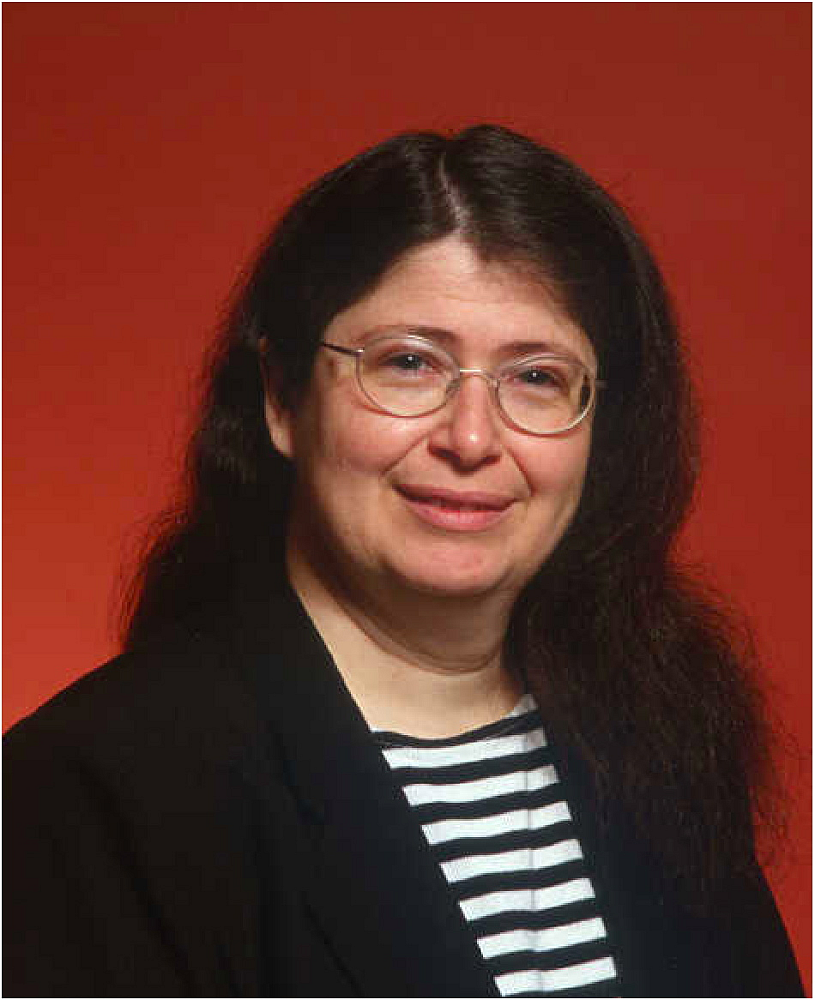
The original Intel Free Press Flickr license was checked independently of Wikimedia Commons. Portrait adaptations are offered under the same CC BY-SA 2.0 license; this image license does not apply to the entire biography. Send documented corrections to info@rachorg.org. Material revisions will be dated. Narrative word count excludes navigation, citations, methodology, and sources.
Sources
- An Interview with Internet Pioneer Radia Perlman, LACNIC. May 30, 2019; first-person recollections, not independently observed scenes.
- Piano and Protocols: The Story of Inventor Radia Perlman, National Inventors Hall of Fame. October 26, 2019; childhood, music, and education.
- Don’t Call Me the Mother of the Internet, Rebecca J. Rosen, The Atlantic. March 3, 2014; published correspondence. Historical Intel title is not current.
- Using Computer Technology to Provide a Creative Learning Environment for Preschool Children, Radia Perlman, MIT. May 1976 research memorandum; repository abstract and bibliographic record.
- Radia Perlman: A pioneer of young children computer programming, Leonel Morgado, Maria Cruz, Ken Kahn. 2006 research paper; author-uploaded full text, including correspondence with Perlman.
- Stabilizing Networks through a Winding Career, Internet Hall of Fame. November 30, 2017; attributed career recollections.
- Radia Perlman: Spanning Tree Protocol, Lemelson-MIT. Historical education and employment chronology; birth-year conflict omitted from this biography.
- An Algorithm for Distributed Computation of a Spanning Tree in an Extended LAN, Radia Perlman, ACM SIGCOMM. 1985 original paper, university-hosted copy; no poem reproduced.
- RFC 5556: TRILL Problem and Applicability Statement, Joe Touch and Radia Perlman, IETF. May 2009; limitations of spanning-tree forwarding and design requirements.
- Network layer protocols with Byzantine robustness, Radia Joy Perlman, MIT. 1988 doctoral record; adviser Dave Clark. Scope also checked against published interviews.
- Q&A: Sun’s Radia Perlman on IP, spanning tree, and the ephemerizer, Bob Brown, Network World. May 15, 2006; independent trade reporting and direct interview.
- RFC 1195: Use of OSI IS-IS for Routing in TCP/IP and Dual Environments, Ross Callon, IETF. December 1990; shared development and integrated IS-IS.
- Fault-Tolerant Broadcast of Routing Information, Radia Perlman. 1983 paper; university-hosted copy, self-stabilization assumptions.
- Radia Perlman Named Intel Fellow, Intel. March 1, 2010 appointment announcement; historical, not current employment.
- RFC 6325: Routing Bridges Base Protocol Specification, Radia Perlman, Donald Eastlake, Dinesh Dutt, Silvano Gai, Anoop Ghanwani, IETF. July 2011 Proposed Standard; subsequently updated, not a universal deployment claim.
- TRILL History, Donald E. Eastlake 3rd, IETF 101. March 2018 participant history, including interoperability testing and standards process.
- RFC 7780: TRILL Clarifications, Corrections, and Updates, Donald Eastlake and colleagues, IETF. February 2016; documents continuing correction and maintenance.
- Network Security: Private Communication in a Public World, third edition, Charlie Kaufman, Radia Perlman, Mike Speciner, Ray Perlner / Addison-Wesley. Publisher lists publication August 31, 2022 and copyright 2023; not a 2026 release.
- An Unassuming Giant in Her Field, Dan Rosenheim, Internet Hall of Fame. March 8, 2021 interview; recognition, teaching, and authorship.
- Why IEEE Fellow Radia Perlman hates technology, Alexander Pasik, Computerworld / IEEE. April 22, 2011 interview; design philosophy and usability.
- A Conversation with Dr. Radia Perlman, University of Washington Bothell. April 17, 2025 report about a January 27 event; report checked, complete video not reviewed.
- Question Everything: Rethinking the Networks We Take for Granted, Radia Perlman / Software Architecture Gathering. September 11, 2026 interview; current opinions, not a deployed replacement protocol.
- Radia Perlman: 2026 speaker profile, Software Architecture Gathering. Current Dell Technologies Fellow role checked September 29; stale relative book date disregarded.
- Network Security, Cryptography, and Quantum, Software Architecture Gathering. Scheduled November 19, 2026 workshop with Charlie Kaufman; future event, not completed.
- Network Protocols: Myths, Missteps, and Mysteries, Software Architecture Gathering. 2026 keynote listing; future program checked September 29.
- Radia Perlman: standards profile, IETF Datatracker. Security Area Directorate reviewer; no active Internet-Drafts listed at reporting cutoff.
- Perlman on the human limits of cryptographic security, Katherine Rivas, Bora Investir / B3. Portuguese-language reporting, August 28, updated September 10, 2026, about Febraban Tech.
- CloudFest USA Q&A with Radia Perlman, CloudFest. Interview associated with the 2025 event; not presented as new September 2026 remarks.
- Radia Perlman: inductee record, National Inventors Hall of Fame. 2016 induction; ongoing education activities and professional recognition.
- Radia Perlman portrait, Intel Free Press / Wikimedia Commons. CC BY-SA 2.0; Commons version uploaded August 2013, original Flickr license independently checked.
- Original portrait and license, Intel Free Press, Flickr. Original account identifies creator and CC BY-SA 2.0; checked September 29, 2026.
- RFC 4271: A Border Gateway Protocol 4, Yakov Rekhter, Tony Li, Susan Hares, IETF. January 2006; policy-routing context, not a claim that current BGP has no subsequent extensions.
- Introduction to Cybersecurity Fundamentals in Networking, FAU Computer Science 7. Winter 2026–27 course reading list, updated September 7; evidence of continuing educational use, not a class taught by Perlman.
- Interconnections, second edition, Radia Perlman / Addison-Wesley. Published September 14, 1999; contents and comparative approach.
- Radia Perlman: employer author page, Dell. Checked September 29; empty author index, not evidence of a new project or departure.